


Thank you for being here. You are receiving this email because you subscribed to Idée Fixe, the newsletter for curious minds. I’m Toni Cowan-Brown, a tech and F1 commentator. I’m a former tech executive who has spent the past five years on the floor of way too many F1, FE, and WEC team garages, learning about the business, politics, and technology of motorsports.

⏳ Reading time: 5 minutes
Shift Happens, weekly pivots where motorsport collides with tech and culture. A quick roundup of the headlines in and around motorsport you should be aware of. I hope you enjoy this new curated format.
The lead lap
A recent article announcing Carmen Jordá’s involvement with a new motorsports project identified her as a “former F1 driver.” This seemingly small error has left me - and many other readers - genuinely infuriated. Not because we want to diminish Jordá’s accomplishments, but because we’re just one word away from pure fabrication. So let’s talk about the cost of careless words and how women don’t need false representation.
Carmen Jordá was a development driver for Lotus and Renault Sport Formula One teams between 2015 and 2017. This made her the eleventh woman in history to be part of a Formula 1 team’s driver lineup - an achievement worth recognising. But she never competed in an F1 Grand Prix. She never qualified for an F1 race. She never took part in an F1 race weekend. The difference between “F1 team member” and “F1 driver” isn’t semantic hairsplitting. It’s the difference between truth and fiction.
This is exactly why clickbait culture is so corrosive and why I bang on about it so often. Publications chase engagement by stretching, bending, and eventually breaking the truth. One word - ”former F1 driver” instead of “former F1 development driver” -transforms reality into something else entirely. It’s not an exaggeration; it’s a fabrication. And once we accept that level of imprecision in reporting, we’ve normalised lying.
This achieved the opposite of its intended effect. As someone genuinely interested in motorsports, I would have been curious to learn more about this project. Carmen Jordá has been involved in various aspects of motorsport throughout her career. Many other readers have reported the same reaction. Rather than generating interest, this careless exaggeration killed it.
Here’s something the article’s authors seem to have missed: women aren’t so desperate for representation that we’ll forgo the truth. We don’t need inflated credentials or manufactured achievements. What we need, and what we deserve, is accurate recognition of real accomplishments and honest discussion of the genuine barriers that exist. Calling Jordá an “F1 driver” doesn’t empower women in motorsport. It undermines them. It suggests that actual achievements aren’t impressive enough on their own. It implies that we need to embellish reality to make women’s contributions seem worthy of attention. That’s not representation. That’s condescension dressed up as progress.
Finally, if we’re going to talk about women in Formula 1, let’s talk about the actual women who have participated - on the grid - during an F1 race weekend, which brings us to our number of the week.
The number of the week
Five, is the number of women who have participated on the grid during an F1 race weekend.
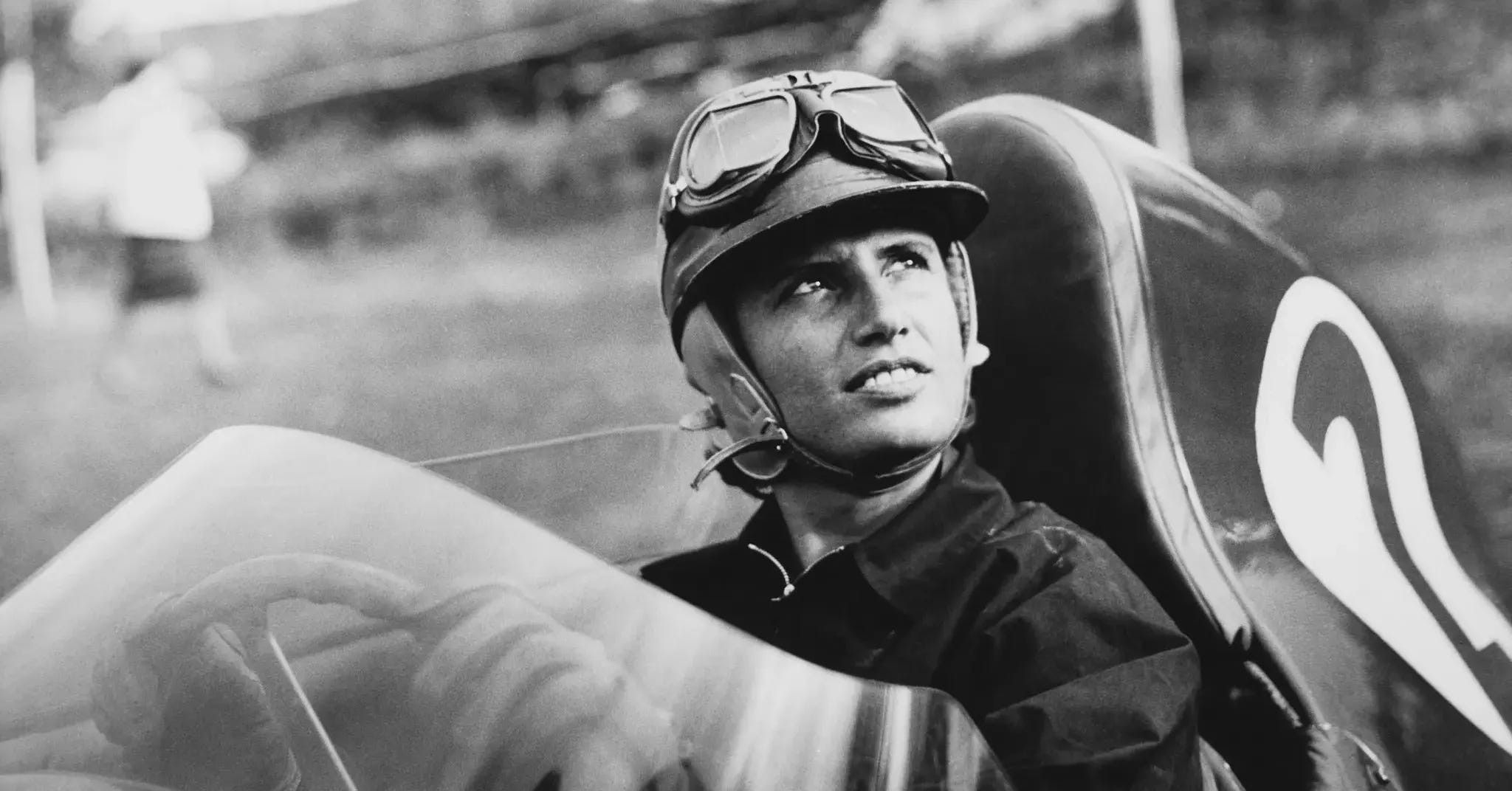
Maria Teresa de Filippis (1958-1959) was the first woman to compete in a Formula 1 Grand Prix. She entered five races and started three, achieving a best finish of tenth place at the 1958 Belgian Grand Prix. When she attempted to enter the French Grand Prix, the race director infamously told her, “The only helmet a woman should wear is the one at the hairdresser’s.”
Lella Lombardi (1974-1976) entered seventeen races and started twelve. At the 1975 Spanish Grand Prix, she finished sixth - earning half a championship point because the race was stopped early following a fatal accident. She remains the first and only woman to have scored points in a Formula 1 World Championship race. Half a point.
Divina Galica (1976-1978) was a professional skier who attempted to qualify for three Grand Prix but failed to make the grid in all three attempts.
Desiré Wilson (1980) attempted to qualify for the 1980 British Grand Prix but did not succeed. However, she did win a non-championship Formula 1 race at Brands Hatch in the British Aurora F1 Championship that same year, making her the only woman to have won a Formula 1 race of any kind.
Giovanna Amati (1992) is the last woman to have entered an F1 race. She failed to qualify for three consecutive Grand Prix with the Brabham team before being replaced mid-season. Notably, her replacement - Damon Hill - also struggled to qualify the same uncompetitive car.
That’s it. Five women. Three who successfully started a race. One who scored points -half a point, to be exact. In 75 years of Formula 1. These numbers don’t represent a lack of talent among women. They represent decades of systemic barriers: limited access to karting and junior formulas, lack of funding and sponsorship, deeply entrenched assumptions about who belongs in a race car. The story of women in Formula 1 is one of extraordinary individuals fighting against enormous structural obstacles.
Three stories that need to be on your radar
How the sports stadiums went luxe. This piece caught my eye as someone who has highlighted at length how sports stadiums were initially built with political means in mind. Modern stadiums have evolved from democratic gathering spaces into stratified monuments to global affluence, where premium experiences now dominate both the architecture and economics of sports venues. We are watching an intricate revenue-maximisation system come to life where stadiums like SoFi feature twelve categories of premium seating layered throughout the lower bowl. Owners have discovered that removing seats and selling space generates more revenue than cramming in bodies, while sophisticated pricing algorithms and long-term suite leases (some approaching $1 million annually) have turned venues into “the most rigorously monetised spaces on earth.”
Premium seating at places like SoFi accounts for just 20% of seats but generates over 50% of ticketing revenue. F1 circuits face the same calculation whereby we maximise revenue per square foot rather than per spectator. The danger is building venues that optimise for corporate entertainment rather than passionate fandom. As one architect notes, the “oceanic feeling of celebrating...with tens of thousands of people who are having the same fan experience as you” is what makes stadiums special. Yet the economic imperative pushes in the opposite direction—suites are “for corporate schmoozing and sips and bites, not bonkers fandom. Money prefers quiet.” F1’s challenge is acute: the sport’s mystique depends on the roar of passionate fans creating electric atmospheres but the financial model increasingly prioritises quiet luxury over raucous enthusiasm. LINK
F1 2026 Regulations – Terminology Update. With the 2026 F1 season just around the corner, this feels like a good time to go over everything that will change in 2026 and how we will be referring to these updates. LINK
Niche fandoms beat mass audience. This is more of a broader media story but one that got me thinking about the future home - in the USA - for F1TV and how F1 has struggled to convert newer fans into paying subscribers. A new survey of media executives reveals what many suspected but few wanted to admit: the future belongs to specialised verticals and superfans, not undifferentiated scale. The message is clear: audience revenue will eclipse advertising, and the companies with the strongest relationships will win. This should be a wake-up call for Formula 1. Despite the sport’s explosive growth in the USA - driven in large part by Drive to Survive and Liberty Media’s savvy marketing - F1 has struggled to convert casual fans into F1TV subscribers. Even though it’s maybe one of the best products F1 has created to date, F1TV offers an often confusing option to fans. Instead of fighting for bundled distribution or broad television deals, F1 should double down on what makes it unique: technical depth, driver access, onboard cameras, team radio, and real-time data that superfans crave. In a media landscape where loyalty trumps reach, F1’s challenge isn’t attracting attention. It’s capitalising on the obsession it’s already created.LINK
One video worth your time
Not a video, but this image of a Cadillac that has been turned into a cactus has been living rent-free in my mind. And somehow, this one image made me very excited for the new Cadillac F1 team in 2026.
One [event] that caught my eye
Last Sunday in Dubai, the Battle of the Sexes took place, and I really wish I had been there. This tennis showcase drew so much talk and controversy, and I’m squarely in the camp of those who don’t understand why. But then again, I’ve always been fascinated by events that push teh boundaries of what we are comfortable with - often meaning just what we are used to.
As the BBC put it, “when murmurs began about Aryna Sabalenka facing Nick Kyrgios in an exhibition match billed as the new 'Battle of the Sexes', many wondered what it was setting out to achieve.” The why was - and I think very much still - up for debate and most likely what was missing. After all, though this was an exhibition match designed for fun and entertainment.
By no means is this perfect, and I wish that they hadn’t changed the court size, but I know practically nothing about tennis, so I’ll avoid diving into this element. I think Western bias has a lot to do with the dislike that people have shown towards this event, as it was held in Dubai. It’s been dubbed a cash grab, which to me simply highlights again that we need to pay our female athletes better so that they are maybe less tempted by these ‘cash grabs’. At the end of the day, I don’t think it harmed women’s tennis - she gave it her all and gave us a great game, and Nick was just there.
Fascinating piece Toni. Surely it’s about time a deadline was set in the infamous F1 regs - the next reg review might be a good opportunity - when teams are required to field a gender balanced driver line-up? One woman and one man driver per team; failing that women in the driver team line up - among reserve drivers - could be a first step in advance of the actual deadline for gender balance. Let’s set a date for F1 joins the 21st century? How about 2035 for gender balance driver among F1 Grand Prix drivers?