


Thank you for being here. You are receiving this email because you subscribed to Idée Fixe, the newsletter for curious minds. I’m Toni Cowan-Brown, a tech and F1 commentator. I’m a former tech executive who has spent the past five years on the floor of way too many F1, FE, and WEC team garages, learning about the business, politics, and technology of motorsports.
⏳ Reading time: 5 minutes
In last week’s newsletter, I briefly spoke about how influencer marketing in Formula 1 is a hit. You may not like it, but it’s working and popular with the brands in and around Formula 1. And when you dig into why, you realise it’s not just effective - it’s perhaps the only marketing strategy that makes sense for a sport built on inaccessibility.
I watched a video a few months ago about the salaries of MotoGP riders and how much they make from product and leather goods sales in the space - far more than any F1 driver. The reason is pretty simple: look at the parking lot of any MotoGP race, and it’s full of motorbikes. These fans want to ride and wear all the gear from their favourite athletes. And they can. A quality motorcycle, protective leathers, a helmet bearing Rossi’s colours - these are attainable dreams. The connection between fan and athlete is tangible, measurable in products purchased and miles ridden.
Unlike in F1, where absolutely no one is showing up in an F1 car or anything close to it. This fundamental difference explains everything about how F1 has embraced influencer marketing. MotoGP sells products; F1 sells a lifestyle. And who better to sell emotions and lifestyles than influencers themselves?
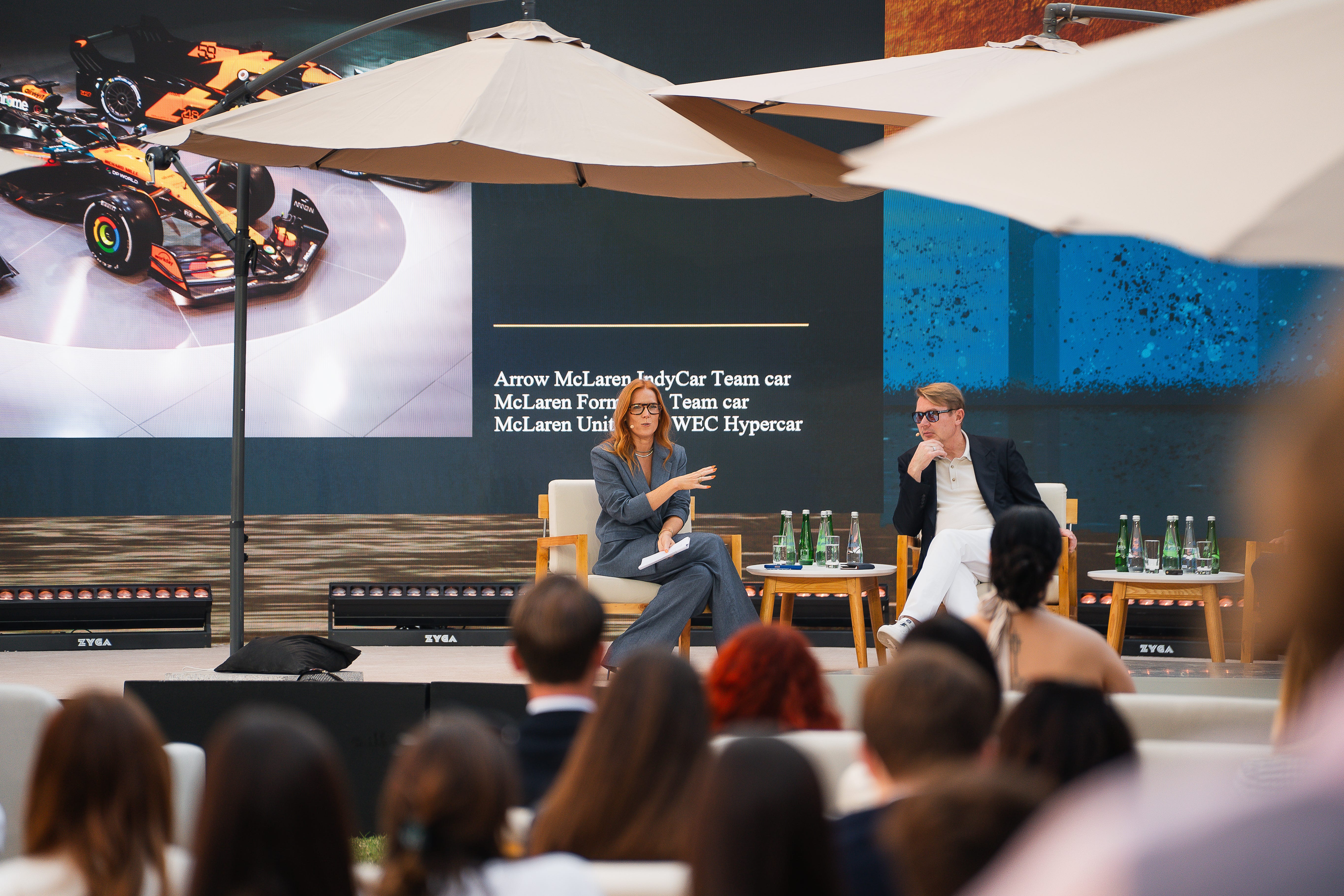
The inaccessibility problem
Formula 1 has always existed in a realm of absurd expense. The cars cost tens of millions of dollars to develop and hundreds of thousands per race to maintain. The road-going supercars from McLaren, Ferrari, and Mercedes-AMG that orbit the sport start at several hundred thousand dollars and climb rapidly from there. A single weekend at a Grand Prix - accounting for tickets, travel, and accommodation - can easily cost what many people earn in months.
This creates a marketing paradox. How do you build passionate engagement with a product that 99.9% of your audience will never touch, afford and certainly not drive? Traditional sports marketing relies on aspiration meeting accessibility. You can buy the jersey, the shoes, and the equipment. You can play a version of the same game your heroes play. In F1, that bridge doesn’t exist.
Enter influencers (and to some degree creators), who’ve become the sport’s most effective ambassadors not despite this inaccessibility, but because of it.
Selling the atmosphere, not the asset
Influencers don’t try to convince you that you’ll own a Ferrari SF-24 or a McLaren 720S. That’s a losing game. Instead, they sell you on the feeling of being adjacent to that world - the glamour of Monaco, the energy of Monza, the technical sophistication, the champagne-soaked podiums, the paddock fashion, the global jet-setting lifestyle.
They’re selling what anthropologists might call “symbolic capital” - the cultural currency of being someone who appreciates F1, who understands the drama, who can speak the language of tyre compounds and DRS zones. In this way, F1 becomes less about the cars themselves and more about membership in an exclusive cultural club, one that’s paradoxically open to anyone with an internet connection.
A lifestyle influencer posting from the Monaco paddock, explaining the drama of team politics while showcasing their outfit and tagging luxury watch brands, creates an aspirational vignette. Their followers aren’t buying a race car - they’re buying into an aesthetic, a way of seeing themselves. They’re purchasing team merchandise, subscribing to F1 TV, attending races, and most importantly, engaging with sponsor brands who’ve correctly identified F1 fans as high-value consumers.
The Netflix effect and creator amplification
Drive to Survive proved that when you strip away the technical barriers and focus on personality, drama, and lifestyle, F1 becomes irresistible content. The show created millions of new fans who care more about driver rivalries and team politics than gear ratios. Influencers have taken this formula and atomised it across every platform and niche.
Fashion influencers cover paddock style. Tech creators explain the engineering in accessible terms. Lifestyle vloggers document the experience of attending races. Gaming influencers stream F1 esports. Each creator translates F1 into their own language for their specific audience (coincidentally, this is precisely why GP Explorer was a success), lowering the sport’s infamous barriers to entry.
This distributed, multi-platform approach achieves what traditional advertising never could, it makes F1 feel personal and accessible despite remaining fundamentally exclusive. You’re not being sold a car; you’re being invited into a conversation.
Why it works: authenticity in aspiration
The most successful influencers maintain a careful balance. They acknowledge the sport’s luxury and expense - that’s part of the appeal - while making their own fandom feel achievable. They react to races in real-time, share behind-the-scenes access, debate controversial decisions, and generally behave like fans with cameras rather than corporate spokespeople.
This pseudo-authenticity (because let’s be honest, most are paid by teams, sponsors, or the sport itself) works because it mirrors how we actually consume F1. We watch from our couches, we debate in group chats, we follow our favourite drivers on Instagram. Influencers simply do this at scale, with better production value and occasional paddock access.
The brands surrounding F1 - from watch manufacturers to fashion houses to luxury hotels - recognise that they’re not selling products but rather the aspiration to be the kind of person who appreciates these things. Influencers are native speakers of aspiration. They’ve built entire careers on making unattainable lifestyles feel tantalisingly close.
A pattern across luxury industries
This dynamic extends far beyond Formula 1. The luxury watch industry transformed when watchfluencers made Patek Philippe and Rolex culturally legible to audiences who will never afford a six-figure timepiece but will absolutely engage with the content. Private aviation companies work with influencers to showcase $50,000 charter flights that viewers will never book. Superyacht brands discovered that user-generated content outperforms traditional advertising even when followers will never set foot on a $500,000-per-week vessel. High-end real estate agents commission property tours of $50 million estates for audiences who aren’t qualified buyers but enthusiastic participants in aspirational theatre.
The pattern is identical: when the core product exists in a realm of extreme expense, influencers don’t sell the product - they sell membership in a cultural community, symbolic capital, and the feeling of proximity to that world. They democratise access to the dream while the product itself remains permanently exclusive.
The dream is the product
Formula 1 has ultimately embraced a truth that MotoGP doesn’t need to grapple with: when the product itself is permanently out of reach, the dream of the product becomes what you’re actually selling. And in the attention economy, influencers are the most efficient dream merchants we’ve ever created.
They’ve turned F1 from an exclusive motorsport into an accessible cultural phenomenon, not by making the cars cheaper or the sport more participatory, but by reframing what it means to be an F1 fan. You don’t need to drive the car. You just need to care about the race, understand the stakes, appreciate the craft, and signal your membership in this global community of enthusiasts.
That’s a product everyone can afford. And that’s why influencer marketing in F1 isn’t just working - it’s become essential and what most brands are chasing.


Well said Toni, as always.
Really enjoyed your insights here. The cultural fluency is everything. Formula 1 is way more than a race and as a super fan myself all I want for Christmas are paddock passes or start/finish grandstand tickets to races throughout the year. So much joy and excitement in the experience of it all.