


Thank you for being here. You are receiving this email because you subscribed to Idée Fixe, the newsletter for curious minds. I’m Toni Cowan-Brown, a tech and F1 commentator. I’m a former tech executive who has spent the past five years on the floor of way too many F1, FE, and WEC team garages, learning about the business, politics, and technology of motorsports.
⏳ Reading time: 7 minutes
I’m in Abu Dhabi for the last race of the season (pinch me), and it’s my first time here for Formula 1, but it’s already my second time here in just a month.
Ever since an interview I did in 2022 during the Austin GP, the topic of F1 liveries and both their direct impact on the car weight and their commercial benefits has fascinated me. As a former tech executive, I understand the tension between building the best product possible and marketing it to a wide audience. The two don’t always see eye to eye.
In the high-stakes world of Formula 1, every square centimetre matters, not just for aerodynamics, but for advertising revenue. These racing machines have evolved into the fastest billboards on Earth, where the delicate balance between marketing ambitions and engineering constraints plays out in vivid colour - or increasingly, in bare carbon fibre as we’ve been seeing increasingly over the years.
From national colours to corporate canvases
Before commercial sponsorship was permitted in Formula 1, teams raced in national colours: Italian teams in rosso corsa red, French teams in bleu de France blue, and British teams predominantly in British racing green. This tradition ended in 1968 when financial pressures forced a pivotal change, and pivot they sure did.
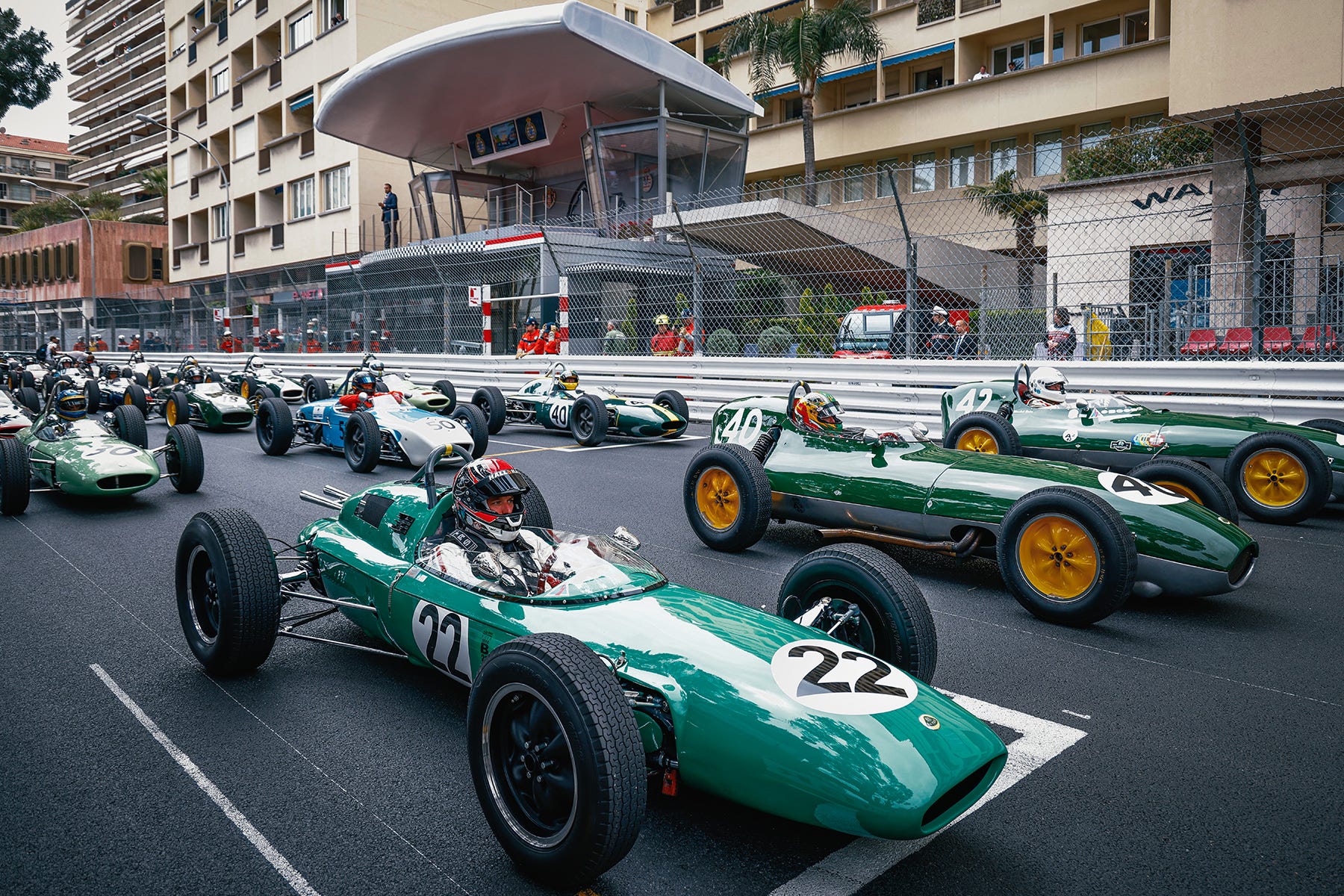
When major sponsors like BP, Shell, and Firestone withdrew from the sport, the FIA decided to allow unrestricted sponsorship. Team Gunston became the first to implement sponsorship branding on their Brabham at the 1968 South African Grand Prix, but it was Colin Chapman’s Lotus team that truly revolutionised the concept at the Monaco Grand Prix, trading their traditional British racing green for the red, gold, and white of Gold Leaf cigarettes.
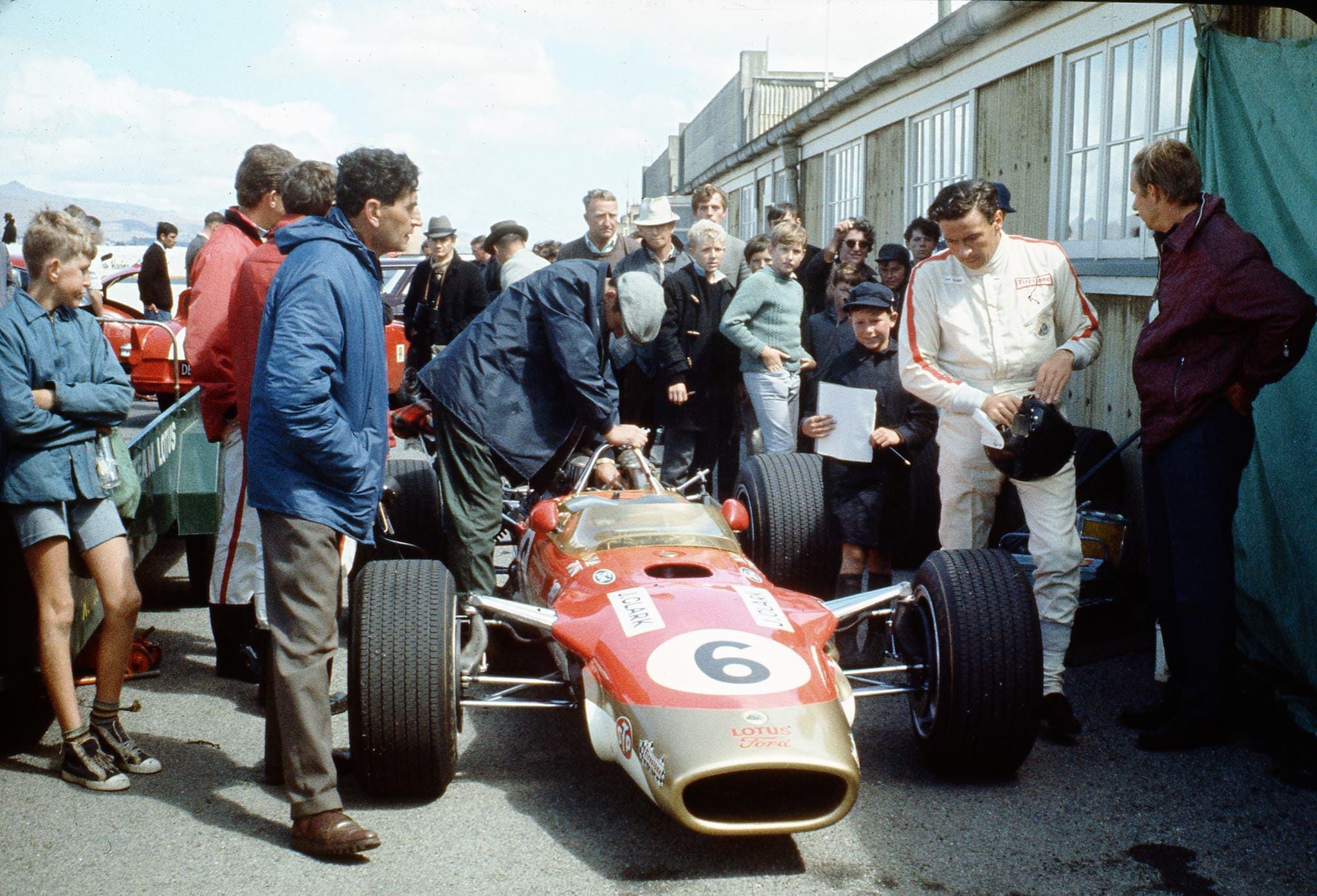
Chapman’s deal with Imperial Tobacco was worth £85,000 annually - a figure that seems modest compared to today’s landscape, where more than 300 brands spend close to $1.3 billion annually on F1 sponsorships. That Monaco Grand Prix moment opened the floodgates, transforming F1 cars from nationally affiliated machines into mobile marketing platforms.
The golden age of iconic liveries
The tobacco industry’s entry into F1 gave us some of the sport’s most memorable designs. Lotus’s partnership with John Player Special from 1972-1978 and 1981-1986 produced the iconic black and gold livery that remains one of the best-known colour schemes in F1 history. Marlboro’s partnership with McLaren from 1974 to 1996, and later with Ferrari from 1997 to 2006, helped secure 28 drivers’ and constructors’ championships, making it arguably the most successful sponsorship in the sport’s history.
The influx of sponsorship money completely transformed the sport, enabling teams to invest in state-of-the-art facilities, wind tunnels, and simulation tools, while attracting world-class engineers and dramatically increasing driver salaries. The vibrant liveries of this era weren’t just beautiful - they funded this big era of F1’s technological evolution.

The modern marketing equation
Today’s sponsorship landscape is more sophisticated and diverse. Entry-level sponsorships start at approximately $1 million annually for minimal branding and marketing rights, while title sponsorships commanding tens of millions place a brand’s name directly into the team’s official title. Recent examples include BWT paying Alpine $25 million per season, Shell contributing $40 million annually to Ferrari, and Aramco’s deal with Aston Martin worth $30 million per season. And now the most recent deal, with Atlassian becoming the title sponsor of the Williams F1 team.
The shift from pure sponsorship to strategic partnerships has fundamentally changed how brands engage with F1, with teams now seeking partners that can enhance performance rather than simply providing funding. Special livery takeovers for specific races have become premium marketing opportunities, allowing sponsors to dominate visual branding at key events. And no one has been doing this better recently than the VCARB team and CashApp (think their tortoise livery in Austin) and OKX and McLaren.

The engineering compromise: paint vs. performance
Here’s where marketing meets cold, hard physics. Since 2022, F1 has faced a weight crisis. The current generation of cars is heavier than ever, making it extremely challenging for teams to reach the minimum weight limit of 800kg (to 768 kg in 2026 under the new regulations - we’ll come back to that in a minute). The solution? Strip away the paint.
Teams typically paint their cars rather than using vinyl wraps to optimise aerodynamics, reduce weight, and ensure durability, with modern F1 cars carrying only about 1.5kg of paint compared to 25-30kg on commercial vehicles. However, even that minimal paint has become negotiable. This is why you’ll see this ongoing dance and tension in F1 teams, whereby the engineering team wants to strip away the paint, but the commercial team might have just closed a new deal and sponsorship placement. Incredible to think that some of these decisions - such as vinyl vs. paint - come down to the aerodynamics of a car.
The shift from colourful liveries to exposed carbon fibre began in earnest in 2022, with teams using lightweight vinyl wraps for most surfaces, reserving paint only for critical components like headrests and mirror stems. Some teams, including Williams, stripped additional paint mid-season, with Aston Martin reportedly removing 0.3kg from their car through livery modifications.
The problem has intensified because modern F1 cars have grown significantly in size, meaning the surface area requiring coverage is much larger than in previous eras, making paint mass a genuine performance factor for the first time.
The technical reality
Teams that maintain colourful liveries, like Aston Martin and McLaren, use advanced techniques including nanoparticle-enhanced paints and infrared “flashing off” that reduces drying time from six hours to one hour. Paint must be applied with absolute precision - even a small step created by a vinyl sponsor decal over paint can disrupt airflow, which is why some teams paint sponsor logos directly onto the car rather than using decals.
However, we are seeing more teams favour vinyl over paint. The operational reality also favours simplicity: painting a single front wing consumes 130 man-hours, while vinyl wrapping achieves the same result in a tenth of the time - a crucial consideration under F1’s cost cap and packed 24-race calendar.
So what’s next? It sounds like innovation in coating technology could bring back vibrant liveries, with paint masses already reduced to just above 1kg for complete coverage. The 2026 regulations are expected to include significant weight reductions - potentially up to 50kg - which could provide teams with more freedom for creative paintwork. So we could be seeing some really incredible livery moments in 2026.
Until then, F1 finds itself in a peculiar paradox: as the sport’s global reach and sponsorship values have never been higher, the cars themselves have never been about exposed carbon fibre. Under the new regulations, the FIA mandates a minimum paint allocation, forcing teams to add a specified weight in livery to preserve the visual spectacle that helps captivate new fans. In 2026, “a minimum of 55% of (car) surface area (when viewed from the side and above) must be covered by painted or stickered liveries as opposed to bare carbon fibre surfaces.” As a reminder, these liveries all need to be greenlit by the FIA.
The evolution of F1 liveries tells a broader story about the sport itself - a relentless pursuit of performance where even the most basic aesthetic choices become engineering decisions measured in milliseconds and millions of dollars. In this world, every gram of paint is a compromise, and every sponsor’s logo is a carefully calculated addition to the fastest billboards ever created.
As I was researching this piece, a member of the VCARB team kindly suggested I read this piece in The Athletic on this topic (by the brilliant Madeline Coleman), and now I’m suggesting you give it a read too.


Another brilliant newsletter! Insightful and informative, love it!