


Thank you for being here. You are receiving this email because you subscribed to Idée Fixe, the newsletter for curious minds. I’m Toni Cowan-Brown, a tech and F1 commentator. I’m a former tech executive who has spent the past five years on the floor of way too many F1, FE, and WEC team garages, learning about the business, politics, and technology of motorsports.
⏳ Reading time: 11min
For three years, Sauber’s F1 cars carried logos that should have raised more eyebrows than they did (in my opinion, anyway). Still to this day, I’m at a loss as to how two interconnected companies - Stake and Kick - plastered their brands across Formula 1 with remarkably little scrutiny. As Audi prepares to enter F1 with a clean slate, it’s worth asking: how did sponsors facing class-action lawsuits, regulatory crackdowns, and accusations of operating unlicensed gambling operations glide through the sport almost entirely unexamined? And why didn’t a single F1 pundit or motorsport journalist (that I could find) look into, question and report on these sponsors?
The answer reveals something slightly uncomfortable about modern F1 media: we’re excellent at covering the sport we know, but remarkably blind to controversies emerging from worlds we don’t know, which is just one reason why I love how much mainstream, tech, culture and even fashion media are now covering this sport, as well as non-motorsport creators and influencers. One of the reasons sponsorship (especially controversial sponsorships) in F1 fascinates me so much is that one of my very first introductions to the sport was in the early 90s, when my dad - also a massive F1 fan - was working in the European Parliament and working specifically on getting tobacco advertising banned - and that also meant banned from sports like F1.
I’ve covered these sponsors multiple times back in 2024 and 2025, but I’ve never written about them in depth. So here goes.
What are Kick and Stake, really
Let’s start with the basics, because if you’re primarily an F1 fan, there’s a decent chance you’ve never heard of either platform - Kick or Stake - outside their racing sponsorships.
Stake is an Australian online casino founded in 2017 by Bijan Tehrani and Ed Craven - a crypto-gambling platform operating from the regulatory haven of Curaçao.
Kick is a video livestreaming service backed by Stake and streaming personality Trainwreckstv, founded in 2022 as a competitor to Twitch. The two aren’t just business partners; they’re essentially a vertically integrated gambling-to-eyeballs pipeline. Stake co-founder Ed Craven is an investor in Kick, and the streaming platform’s entire economic model depends on funnelling viewers toward Stake’s casino.
Think of it this way: Kick offers streamers an impossibly generous 95/5 revenue split -and any streamer will tell you there are far better terms than what Twitch offers. Why? As Concordia University assistant professor Andrei Zanescu noted, this can be explained by the influx of new users that Stake receives as a result of gambling streamers broadcasting themselves on Kick while using the gambling platform.
Critics have characterised Kick as existing primarily as a Stake advertisement designed to reach a broader, younger demographic. You’re not watching a neutral streaming platform; you’re watching an elaborate funnel designed to normalise gambling to audiences that skew young and male - and well, that’s precisely one of F1’s target demographics, although I would argue that’s somewhat of a misconception these days.
The legal quicksand
Here’s where things get genuinely strange - even for me. These weren’t just ethically grey sponsors; they were companies facing serious legal challenges that any due diligence process should have flagged.
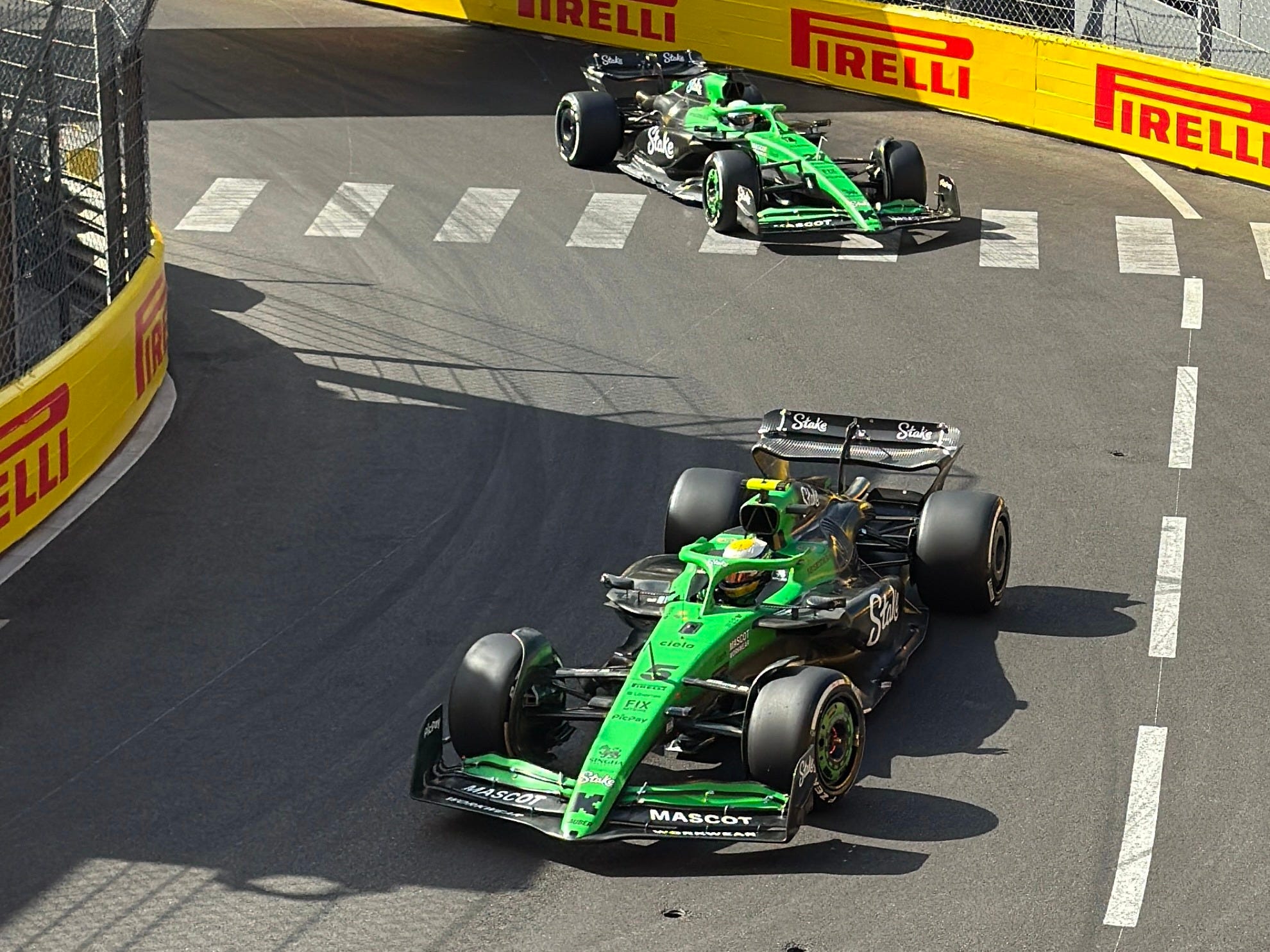
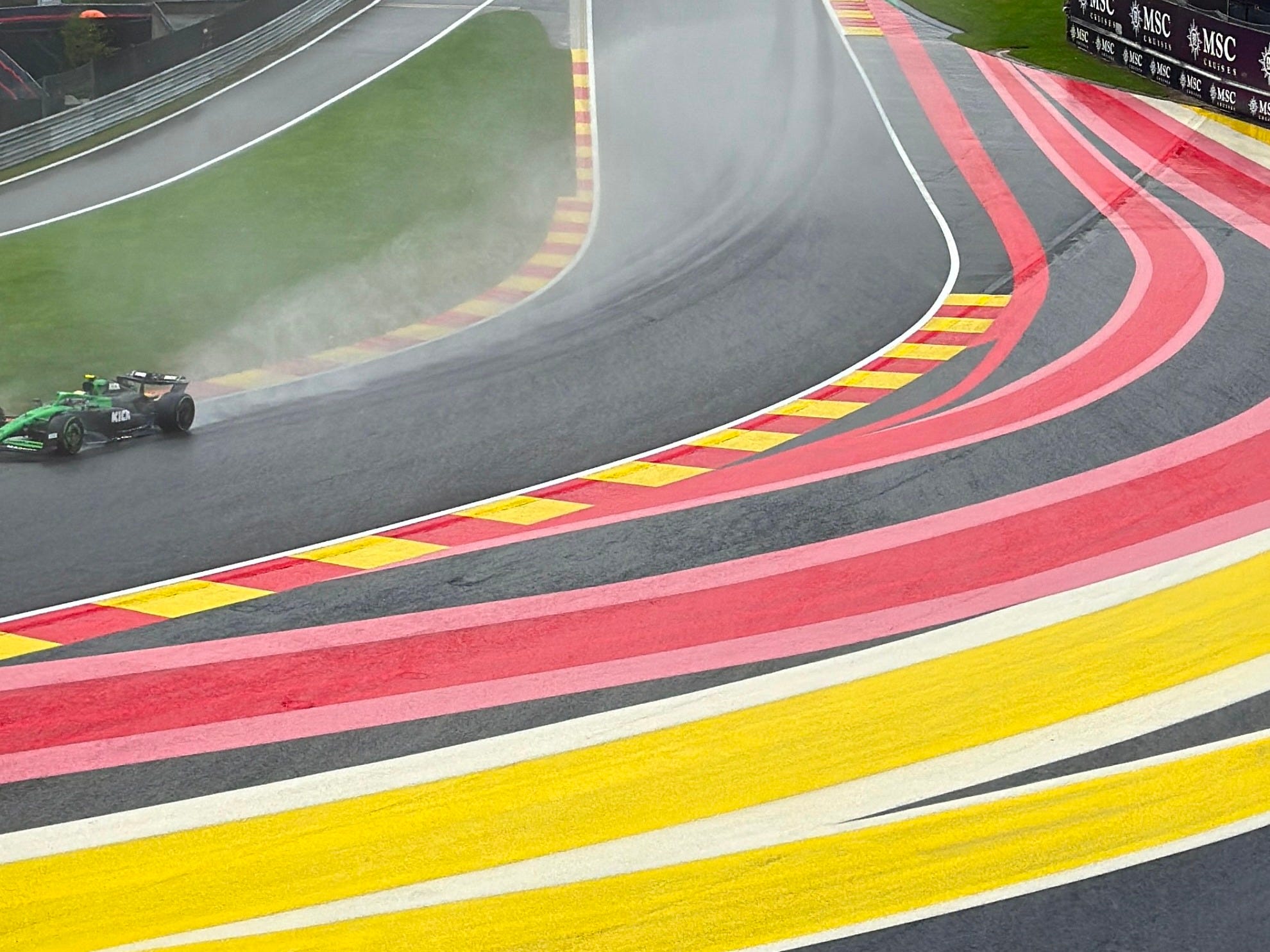
Switzerland, 2024: The Federal Gaming Board opened proceedings against Sauber over concerns that the team’s use of the Stake logo might constitute advertising, potentially violating the Federal Gambling Act, since Stake does not have a Swiss license. The team, based in Switzerland, was potentially breaking Swiss law by advertising its own title sponsor. You might have noticed over the past few years that, depending on the market, the team kit and car lively changed from Stake to Kick.
United Kingdom, 2025: The UK Gambling Commission ordered the shutdown of Stake’s UK website following a controversial advertisement involving an adult performer outside Nottingham Trent University that violated advertising standards. Not a fine. A shutdown. This case tied Stake to the English Premier League Football Club Everton where their logo was prominently displayed on the front of their shirt.
United States, ongoing: The legal situation gets murkier. Multiple class-action lawsuits allege that Stake.us, the company’s American subsidiary, is actually an unlicensed online gambling operation violating state laws while marketing itself as a harmless “social casino”. The “sweepstakes” model Stake.us uses where you theoretically buy virtual tokens, not gamble, is under sustained legal attack. Lawsuits claim that despite Stake’s assertion that players purchase harmless virtual tokens, the pricing structure reveals that “Stake Cash” is the real product being sold to entice real-money gambling. By 2025, Los Angeles sued Stake.us, asking the court to shut down operations and require the company to refund player losses, with the city attorney describing it as “especially pernicious and addictive because players can access the casino 24 hours a day, seven days a week, directly from their mobile phones”. And all of this feels pretty newsworthy, but almost all of it went unreported by the F1 and motorsports community.
The influencer playbook gone wrong
The celebrity angle makes this even messier. Drake signed a deal with Stake reportedly worth $100 million per year. You may remember his countless social posts where he shared himself livestreaming and wagering huge amounts on Stake games and promoting the site on his widely followed social media accounts. But lawsuits allege that on many occasions, Drake and influencer Adin Ross were not wagering their own money but “house money” provided by Stake, which if not disclosed would violate Missouri state law.
One of the world’s biggest music stars, livestreaming gambling sessions to millions of young fans, potentially using house money without disclosure, all while promoting a platform sponsoring an F1 team. Allegations include “glamorising gambling to millions of impressionable fans who treat his betting habits as gospel”.
Drake later deleted his Kick account in 2025 after venting anger at the platform’s owners, calling Stake co-founder Ed Craven a snake and claiming “they treat us like shit”. When your $100-million-per-year celebrity ambassador publicly calls you a snake and rage-quits your platform, that’s typically a red flag about business practices. That being said, Drake was back pushing his bets on Stake during the Super Bowl, so maybe some agreement has been met.
The silence that speaks volumes
So why didn’t F1 media cover any of this? Here are my theories, from most to least charitable:
The Knowledge Gap: F1 journalists are brilliant at decoding tyre compounds and technical directives. But Twitch culture? Crypto gambling? Influencer marketing economics? That’s a different expertise entirely. I suspect most F1 journalists simply didn’t understand what they were looking at. Stake and Kick emerged from a digital subculture - gaming streams, crypto gambling, Discord communities - that exists in a parallel media universe. If you don’t follow that world, you might see “Stake” on a Sauber and think “oh, another betting sponsor” without realising you’re looking at something far more complex and controversial.
Gambling Fatigue: F1 has, in one way or another, been ‘dealing’ with gambling sponsors. Various regional betting companies. Historical partnerships with Monaco casinos. Perhaps Stake felt like just another betting logo in a sport already comfortable with the industry. The sport’s long history of morally complicated sponsors - tobacco, oil states, crypto exchanges - may have created a numbness. Another questionable sponsor? Sure, whatever, at least it’s not Mission Winnow pretending not to be Philip Morris.
Geoblocking Made It Invisible: Stake advertising on Sauber’s website was not viewable in Switzerland and other restricted countries due to geoblocking measures taken by Sauber to ensure legal compliance. The team constantly swapped between Stake and Kick branding at roughly eight races where gambling ads were prohibited. This shape-shifting sponsorship may have made it feel less prominent, less permanent - background noise rather than a story worth investigating.
The Lame Duck Factor: Everyone knew Audi was coming in 2026. The team was in financial limbo after losing Alfa Romeo, but was unable to invest in long-term partnerships due to being subject to an Audi takeover. Stake felt like a stopgap sponsor, money to keep the lights on until the German manufacturer arrived. Why investigate deeply when it’s clearly temporary?
Access Journalism: For many, F1 journalism depends on paddock access. Aggressively investigating a team’s title sponsor could damage those relationships. Smaller outlets, especially, can’t afford to be frozen out. This creates a climate where certain questions don’t get asked.
Regulatory Complexity: The legal status of these companies is genuinely complicated. Operating from Curaçao, using sweepstakes models, geoblocking different territories, navigating crypto gambling laws that barely exist - it’s a regulatory maze. Maybe journalists simply didn’t have the time, bandwith or couldn’t figure out whether these were illegal operations or just sleazy-but-legal ones.
What this reveals about F1 media
The Stake/Kick story does, however, expose a structural weakness in how F1 is covered. The sport is globalising, attracting younger and more diverse audiences, partnering with companies from emerging industries. But F1 media largely remains what it’s always been: specialists in motorsport, engineering, team politics, and driver psychology.
When controversies emerge from worlds we don’t naturally follow - streaming culture, crypto ecosystems, influencer marketing, AI and LLMs - they are often overlooked or ignored. Not trained to recognise the red flags. Don’t have sources in those industries. Don’t even speak the language.
Compare the Stake/Kick silence to how F1 media covered FTX. When Sam Bankman-Fried’s crypto exchange collapsed, it was front-page news everywhere, and F1’s Mercedes partnership became part of the story. But FTX’s fraud was so spectacular, so mainstream, that you couldn’t miss it. Stake and Kick’s controversies were more insidious - regulatory fights, class-action suits, influencer marketing scandals that played out in courtrooms and on gaming forums, not CNN.
The sport aggressively courted tobacco money for decades, and journalists rightly documented every controversy. Crypto sponsors received heavy scrutiny after the FTX collapse. Even Mission Winnow faced persistent media questioning about whether it was just Philip Morris trying to circumvent advertising bans. Yet Kick and Stake quietly exited F1 when Audi took over, with little fanfare or retrospective analysis.
The bigger question around accountability
The sport is signing sponsorship deals with Web3 companies, NFT platforms, emerging fintech firms, sports betting apps, and technology companies whose business models aren’t always immediately transparent. F1’s expansion into new markets - particularly the U.S. - brings exposure to industries and regulatory frameworks that European motorsport journalists may not fully understand.
We can’t credibly claim to hold the sport accountable if we’re only equipped to scrutinise the controversies we’re already familiar with. Tobacco? We know that playbook. Oil and gas? We understand those politics. Traditional gambling? That’s familiar terrain. But crypto gambling platforms operating from tax havens while funnelling users through influencer-backed streaming services? That’s not in our wheelhouse. And that ignorance is a vulnerability that sponsors can exploit.
As the sport signs increasingly complex commercial deals with companies from industries we don’t traditionally cover, the motorsport media landscape needs to adapt. That might mean F1 media hiring people with expertise in adjacent fields. Having someone on staff who understands fintech, crypto, gaming, or digital marketing. Creating partnerships with journalists from those beats. At minimum, it means recognising our blind spots and doing basic Google searches before accepting sponsor announcements at face value.
Because here’s the thing: Stake and Kick weren’t hiding. The lawsuits were public. The regulatory actions were announced. The controversy around Drake’s gambling streams was covered extensively - just not by F1 media. The next Stake is coming. It might be an AI company with questionable data practices, or a crypto firm operating in regulatory grey areas, or a sports betting platform with concerning addiction rates.
The Stake/Kick story is a reminder that understanding modern F1 requires more than understanding F1. It requires understanding the broader economic and technological forces reshaping sports, media, and fan experiences. I wasn’t writing about Formula 1 in the 70s, 80s or even 90s, but I can’t help but feel like we used to notice and speak up more about these topics.
Great piece! This feels like a challenge across sports more broadly. The sport itself gets excellent coverage, but the commercial and financial side is underexplored. These are billion-dollar industries, and the commercial side is just as important to understand as what happens on the track/pitch/court.
Thank you for this thought provoking article. I think the Stake deal reflects the increasing monetization of F1. The commercial agreements between the teams and sponsors, as reflected in the sponsors names on the cars, borders on the excessive, especially for the top teams. I don’t like seeing all the names displayed on the cars and around the circuits. Our eyeballs are being assaulted and captured without our permission.