


Thank you for being here. You are receiving this email because you subscribed to Idée Fixe, the newsletter for curious minds, read by young and affluent insiders in motorsport.

⏳ Reading time: 7 minutes
Shift Happens, weekly pivots where motorsport collides with tech and culture. And a quick roundup of the headlines in and around motorsport you should be aware of, as they explain the cultural shifts we are seeing in this space.
I finally decided to open up chats and use the chat function on here. Join me to discuss the new interview with Lando Norris I just posted (video linked at the bottom of the email), because so far it’s just me hanging out on my own, and it’s lonely.

Are we done with clickbait and ragebait culture? So much has happened in the media landscape in the past few weeks, and they all feel connected. It’s clearly become acceptable to hate on influencers, and it feels very normal because it’s just another way for society to disregard women and hate on them. Let’s face it, the term ‘creator’ very much got coined as more men were becoming what we would call influencers, but there was no way they were going to categorise themselves as such. Vulture published a piece about the rise of ‘ragebaiting’ content, which I’ve been screaming about in the Formula 1 space for years now, and finally someone laid it all out. Kyle Raymond Fitzpatrick describes it as “a means to break through the noise, to be so extra and ridiculous that people pay attention.” The reason behind why this type of content is on the rise is layered: as a whole, we are experiencing influencer fatigue; AI is highlighting just how easy it is to replicate soulless posting (I dive into this further in today’s Lead Lap); regular content on social is no longer performing as well as it used to, so we are resorting to ragebait content to guarantee clicks and views. And as a result (maybe), independent journalists are having a moment.
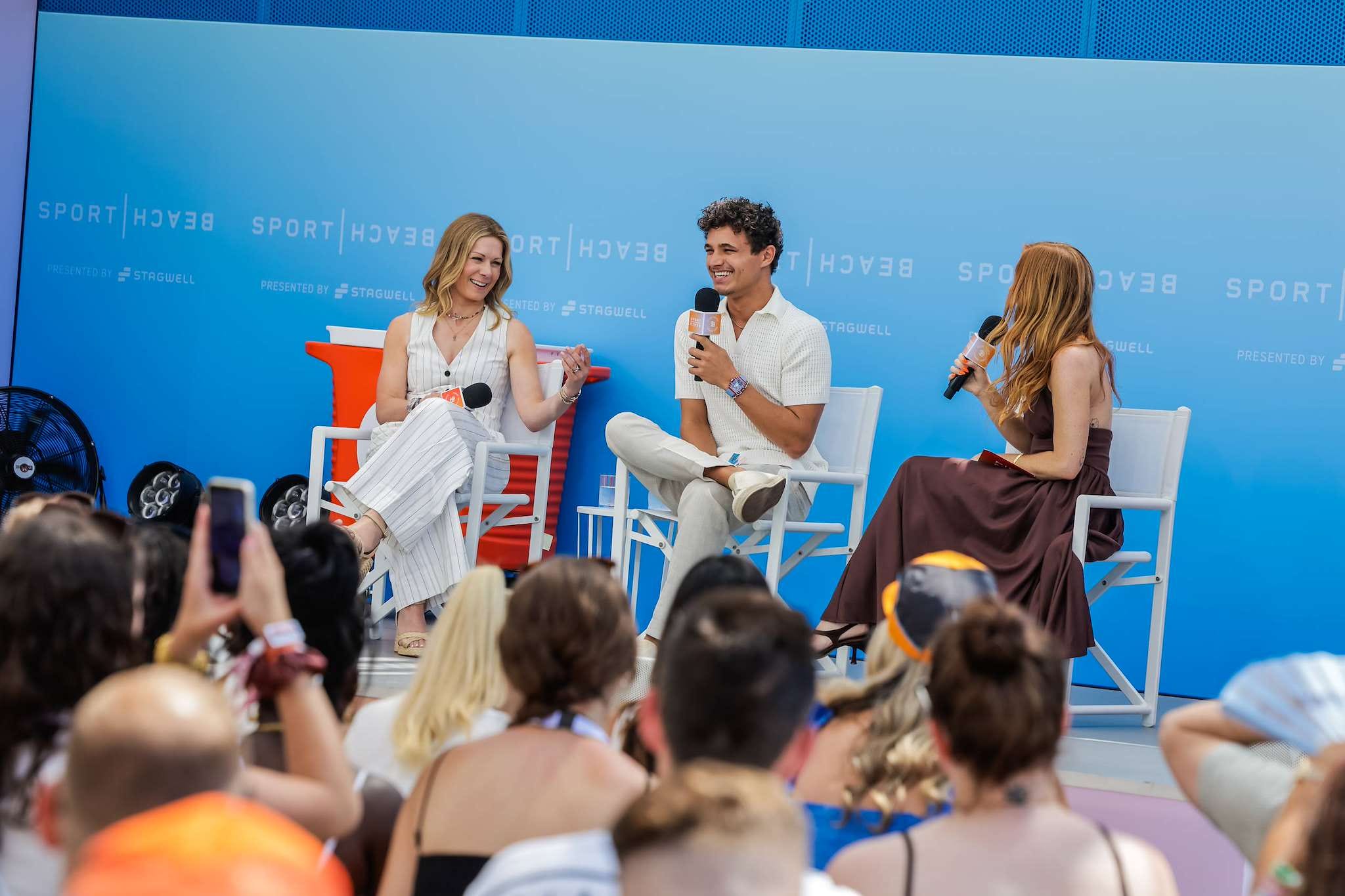
As I write this newsletter, I’m preparing to share on YouTube the interview I did with Lando Norris at Sport Beach during Cannes Lions a few months ago. I felt a strange sense of both excitement and dread. Excitement, because I’m finally able to share this great conversation with F1 fans who weren’t in attendance that day. Dread, because I know someone somewhere will find something to rage about - because we’ve gotten to a place online where just having fun, learning and enjoying the content is no longer profitable. It almost feels like there is a constant need to be triggered to feel something (consumer) and make a living (creator). The comment section has become a ‘free-for-all’ screaming match which drives further engagement, and so the cycle continues. It’s as if we’ve somehow tapped into collective boredom and weaponised it.
The [lead] lap
A couple of months ago, the EU Council proved my point about AI and sport influencers. There was this trend that spread across social media for a few weeks, and then disappeared just as quickly as it came. But the learnings and takeaways from it will be longer-lasting, or so there should be.
The trend in question was AI-generated videos of objectively beautiful women giving paddock tours at F1 races or seen in an F1 garage staring out into the grandstands - mostly in the Ferrari garage. The videos were hyper-realistic and completely fake. And almost nobody noticed - because they weren’t that different from the real thing.
Now, hold that thought for me. A few weeks back, Politico reported that the EU Council is developing a pilot programme to invite up to ten content creators per event to EU leaders’ summits. Participating creators won’t receive press credentials and won’t be permitted to ask questions. “Content creators will be accompanied at all times and will not be treated as media,” a Council official confirmed.
So they want the eyeballs, the reach, and of course the relevance that traditional media can no longer guarantee. But they don’t want the opinions, the scrutiny, or the voice. Which raises an obvious question: if that’s all you want from a creator, why not just build an AI one? Feed it the key messages, generate the content, skip the flight costs. But that obviously makes you feel a certain way, and the mere suggestion of this will get the same people who suggested the above very angry. And if you are angry at my suggestion of AI influencers, you should also be angry at this proposal because they are the same. As the International Press Association noted, the arrangement means influencers won’t have to disclose who pays them, so the optics of credibility are free of charge, while the inconvenience of independent thought gets quietly removed.
This is the same logic playing out in the F1 paddock, in fashion weeks, in every “exclusive access” environment where presence has become the product that we are all chasing. Because somehow this access equals (as it almost always has) credibility, visibility, access, self-worth… But when your value proposition is purely being there - the backdrop, the aesthetic, the social proof… all serve to help build teh case for you, then you are one well-trained model away from being replaceable.
The creators who can’t be replicated are the ones with a point of view, with lived experiences and a desire to share them and with a voice. The ones who ask the uncomfortable question in the press conference, or explain why a regulation matters, not just that it exists. The one who cares less about the access than the actual content. In those cases, that knowledge isn’t a backdrop, but rather it’s what guarantees they will have a job tomorrow.
Simply put, you can’t want to work with creators for their trust and reach, and then surgically remove the thing that built both. That’s not a communications strategy nor is it a marketing strategy. It feels more like a morbid ventriloquist act, and as audiences and consumers get smarter, they will eventually notice the hand.
Three [stories] on my radar
The New TAG Heuer Carrera Chronograph x Team Ikuzawa. I actually met the wonderfully charming Mai Ikuzawa in Monaco during the F1 Grand Prix. We were sat at dinner next to one another, and she told me she had another collaboration in the works with TAG, and here it is. There is always such a playfulness to her collections and pieces, and this one is no different. The Carrera x Team Ikuzawa is a small-run collector’s piece with only 150 pieces made, and a somewhat hefty price tag (priced at $10,500). But it’s certainly a collector’s item.
The biggest story in sports this past week didn’t happen in motorsports and certainly not in F1 - it’s summer break after all; then again, we call it silly season - but rather it happened in football. See, Infantino had his very own Icarus moment when he decided to put the World Cup up for sale. Not all of it, don’t panic, just the part that makes money. But the piece of the story that caught my eye was this ‘not so little’ detail. The commercial architect of this FIFA deal is none other than Greg Maffei - the same man who ran Liberty Media when it bought Formula One. I broke down the story and the interesting parallel here. Thankfully, it looks like this idea is dead in the water even before it got started, and with some pretty costly repercussions for Infantino.
The World Endurance Championship (WEC) has updated its 2026 calendar and announced that they are no longer going to Qatar and Bahrain, and instead will finish the season in Europe - Barcelona and Imola to be specific. It’s looking increasingly likely we won’t be finishing the F1 season in Abu Dhabi either. LINK
What I told [my clients] this week
We are drowning in a sea of paid collaborations and ads on social media, which probably explains why we feel so disenchanted with a space that was once our go-to for bursts of creativity and an endless source of inspiration. And it’s all still there (I promise), just buried under a thick layer of paid-for content and boosted ads.
I wish more brands and sponsors in F1 understood that paid collaborations with creators don’t need to be about pushing the product per se - especially not a product 90% of F1 fans can’t afford or do not need right now. Rather, the best play is being seen as the hosts and facilitators who grant - as a result of the proximity and involvement in the sport - access to moments, people and spaces we wouldn’t normally be invited to.
Let the creator/influencer create the content that they are uniquely positioned to create, and in return we thank the brand for making it possible. That message is one almost all of us can wrap our heads around, and have an emotional connection to.
One [video] worth your time
[Bon goût] - for those with an acquired taste.
Meyers Manx came to San Francisco last Friday and organised what I can only describe as the most curious of invitations - an evening of Disco and Sushi at Motoring Coffee. But I was there for neither, and really, I just wanted to hear more about the brand and the story behind Meyers Manx, and obviously learn all about the buggy. I’m hooked on both the story behind the brand and the product and lifestyle they are selling. The whole brand almost feels like a moodboard, rather than an engineer’s spec sheet, and it’s a moodboard I want in on.
On Friday I’m heading to London for a brand trip with Chase and Jaguar, as well as covering the final two races of the Formula E season.


I’m Toni Cowan-Brown, a tech and F1 commentator and the Editor-At-Large at Esses Magazine. I’m a former tech executive who has spent the past six years on the floor of way too many F1, FE, and WEC team garages, learning about the business, politics, culture and technology of motorsports.
Strong point on access versus actual voice. A creator’s audience is valuable because of the trust that comes from interpretation, knowledge, and a consistent point of view. When an institution wants that audience but removes the ability to question or reach independent conclusions, it is only borrowing the appearance of credibility while undercutting what created it.
This reminded me of a piece I recently came across by Bill Sparks called “Why the Old Branding Playbook Stopped Working”:
https://nowbuildsnext.substack.com/p/why-the-old-branding-playbook-stopped
He writes about the shift from a time when brands could control their message through a mostly captive mass audience to one where customers, creators, and communities now help shape the story. Your example shows the contradiction that appears when institutions use the new distribution system but still want the old level of control over the message.
AI just makes that contradiction harder to ignore. Presence and the look of being close to the action are cheap to fake now. Real context, judgment, and the willingness to risk future access are still expensive.