


Thank you for being here. You are receiving this email because you subscribed to Idée Fixe, the newsletter for curious minds, read by young and affluent insiders in motorsport.
I’m Toni Cowan-Brown, a tech and F1 commentator. I’m a former tech executive who has spent the past six years on the floor of way too many F1, FE, and WEC team garages, learning about the business, politics, culture and technology of motorsports.
⏳ Reading time: 7 minutes
Let me start by saying that yes, this piece will be a short cultural criticism about how our misplaced anger towards influencers - often young women - is doing us all a disservice. I’m struggling to understand why we are still punching down at influencers when we should know better by now. I’ve been creating content online daily for over two decades. I still have my OG lifestyle website, which I created in 2008 because this space taught me so much. And some days it feels like not a lot has changed in the past 20 years, and I struggle with wrapping my head around this.
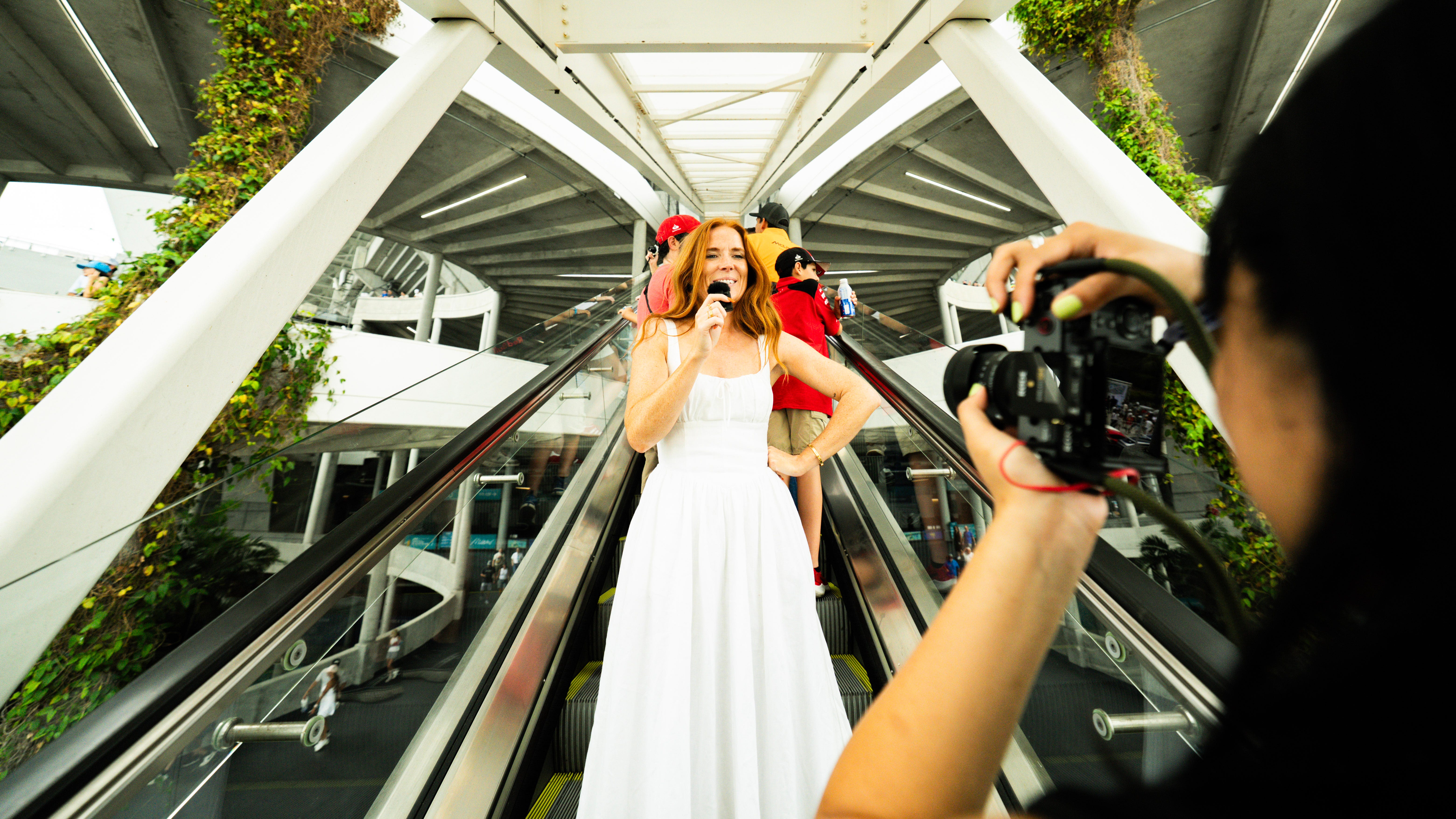
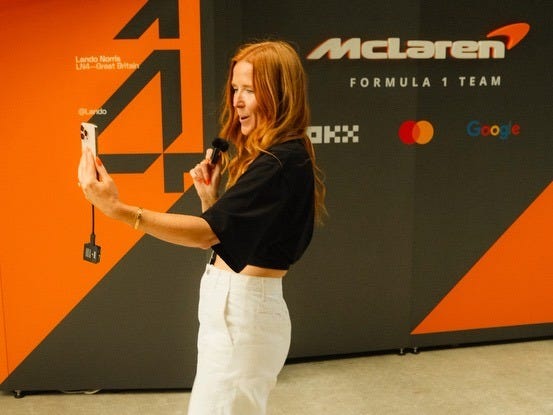
Melbourne. The first race weekend of the 2026 Formula 1 season. The paddock is gleaming, the cars are new, the regulations have been overhauled, and most of us in the media centre are locked into the screens trying to understand the new cars and rules. And somewhere on the internet, someone is already furious that a woman with a ring light, an iPhone and a large following got a Paddock pass.
This happens every year like clockwork. Not just in F1. It happens at fashion week. It happened again at the Oscars, where Variety ran a piece titled “Jake Shane’s Questions at the Vanity Fair Oscar Party Prove Influencers Shouldn’t Be Red Carpet Reporters.”
The framing is always the same: there is a ‘sacred’ space, and the wrong people are in it. Where we see the failings of one individual as proof that an entire group in unworthy of being in a specific ‘sacred’ space. It’s gatekeeping revinvented and remastered. This year, all the aforementioned events happened in the span of a month and by the end, I found myself silently screaming that we are doomed because media literacy is nowhere to be found. It’s the framing and bias I want to focus on today, more so than some of the off-putting work by certain individuals who were most likely, in some cases, not up for the task or unprepared, and in others, just the wrong fit.
It’s hard to imagine the inventor of the VF Oscar party, Graydon Carter, an editor who stress-tested every single word on his magazine’s cover, would have thought that a TikTok personality and podcaster with one joke, expressed with increasing volume but no other development, was an appropriate booking.
The ring light in the room
Influencers aren’t new. You just didn’t have a word for them. The influencer didn’t emerge from TikTok. She emerged from every era that ever had a person whose lifestyle, taste, or personality shaped what other people wanted - the tastemakers. In the 1990s, it was the athlete with the sneaker deal, the actress whose haircut launched a thousand salon appointments, the model on a billboard wearing Calvin Klein, the DJ who made a record label. They were paid to be seen with things and go places. They moved culture. We just called them celebrities, or personalities, or “brand ambassadors,” and thought nothing of it.
What changed isn’t the behaviour, it’s the visibility. Social media collapsed the distance between the influencer and the audience, which means the mechanics of the whole thing are now exposed in real time. You can see the ring light, the awkward pause before the scripted line, and the paddock walk filmed vertically for a Reel. You couldn’t see any of that when the arrangement was brokered through a PR agency, buried in a magazine spread and happening in spaces very few got to go and see. All of us now have cameras, so the casual bystander is offering the BTS of how all of this is being crafted in real time. The deal was always there. Now you just can’t ignore it.
Those seats were never going to be yours.
This is perhaps the most persistent myth in the whole conversation: that influencer access comes at the expense of “real fans.” It doesn’t. It never did.
The paddock hospitality suite that a content creator is standing in front of? It belongs to a sponsor. The courtside seats at the NBA game next to a YouTuber? A brand activation. The Vanity Fair Oscar Party invite list? Managed by publicists and shaped by what generates coverage. None of these access points were sitting in a pool waiting to be allocated to the passionate and deserving. They are marketing infrastructure, and they were always going to go to whoever serves the marketing goal. Even those incredible (and I mean it, I love them too) moments when fans get free VIP tickets or a Paddock pass for the day - these moments are filmed, they create content (even if it’s feel-good content - it’s still content) to feed the massive content machine these teams and series serve. We all play a role, and these roles are not interchangeable.
Brands and teams put influencers in those spaces because influencers reach audiences that traditional media doesn’t. That’s not a cultural catastrophe - it’s a distribution and marketing strategy. You can disagree with it, but you’re arguing with a spreadsheet, not a moral failing.
This frustration often highlights a failure of media literacy. Influencers, like celebrities before them, are part of the marketing machine - invited, paid, and positioned to serve a commercial purpose. Just like commentators, journalists and presenters are not interchangeable. Each one provides a very specific role within the ecosystem. Fans are not. Fans sit on the other side of that equation entirely, and that’s not an insult - it’s just the architecture of how modern sports and entertainment work. Knowing which side of the glass you’re on doesn’t make you a lesser participant. It just means you understand the room.
They’re not replacing journalists. They’re filling a different seat entirely.
There’s a legitimate question buried under the snark about red carpet reporters or Paddock influencers who ask celebrities to “act like a cat.” It goes something like: what is the purpose of this access, and is it being used well?
Fair. There is absolutely a time and place for incisive, informed, forensic journalism and that place is not a Vanity Fair party at midnight. There is also a time and place for chaotic, parasocial, unscripted content that makes a younger audience feel like they’re at the party too. These two things are not in competition. They serve different people with different needs, and the outlets commissioning them know exactly which one they’re ordering.
The problem isn’t that the influencer is there. The problem - if there is one - is when access that used to go to journalists who would do something substantive with it now goes exclusively to content creators who won’t. But that’s an editorial decision made by teams and rights holders. Direct your frustration accordingly. I actually think the social and editorial teams need to spend more time mapping out when, how and why certain content is captured and by whom.
And then there’s the part we’re not saying out loud.
Look at who we’re actually mad at. When you scroll through the comments - “she doesn’t even know what DRS is,” “he’s never watched a race in his life,” “this isn’t what the paddock is for”, “they’re not even a real fan'“ look at who the post is about. Young women. People of colour. People from communities that have historically been kept at arm’s length from the rooms where these sports are celebrated and monetised.
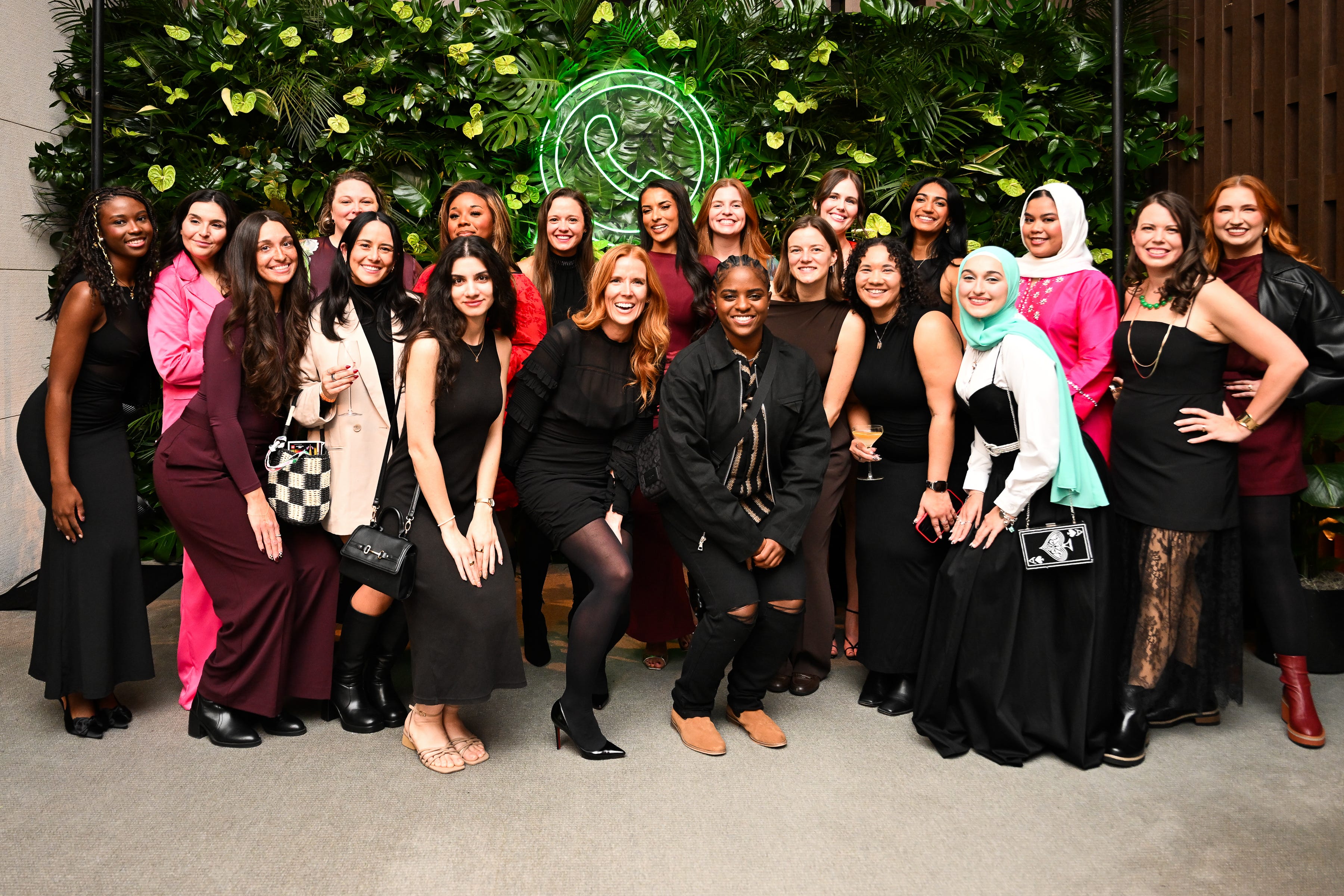
The ones who built their own platforms precisely because the traditional gatekeepers weren’t going to hand them credentials. And for what it’s worth, this is not unique to this space, and certainly not unique to Formula 1. I’ve seen this firsthand in politics, in tech, and in the broader media landscape. I’ve said this since day one. I started creating my content in 2019 out of necessity, not passion. I needed people to talk about politics, about technology, culture and even Formula 1 in a way that was digestible to me, even fun to participate in. I needed the sport framed in stories and anchored in human moments. I needed me to talk about this space to myself. And this is true for so many of us. In a recently published video, Eila Park Robertson (whom I’m obsessed with) says the following:
“It’s not an accident that the most successful and transformational communications we’re seeing out of political offices are being led by women of colour. Case in point: Zara Rahim led the narrative for Zohran Mamdami, Camille Zapat for Gavin Newsom, and Annie Wu for Fetterman. There is a reason why we are uniquely suited for the most critical operation in any political office - comms. […] Women of colour are in a completely different league to other communicators because they are Olympians in their craft - not because they wanted to be. They trained because they had to, to survive.”
We don’t share and show that same anger towards every sponsor guest who has ever stood in a hospitality suite without knowing a gear ratio. We are not writing think-pieces about the C-suite executives in the paddock on corporate passes who couldn’t tell you the difference between an undercut and an overcut. We are specifically, repeatedly and viscerally angry at the ones who look like they don’t belong - and we have decided that “don’t belong” means “didn’t come up through the channels we recognise.” That’s worth sitting in my opinion, especially when this sort of gatekeeping is coming from the exact communities who’ve been kept on the outside for so long.
The sport will be fine. The Oscars will survive Jake Shane. The paddock existed before influencers and will exist after whatever replaces them. But if we’re going to have this argument every single season, every fashion week, every awards cycle - the least we can do is be honest about who we’re actually angry at. It’s not the girl with the ring light. It never was.
The part that stands out is realizing the paddock was never meant to be a merit-based space in the first place.
It’s structured around visibility and distribution.
Once you see it that way, a lot of the frustration feels misdirected.
Excellent points. As always