

Thank you for being here. You are receiving this email because you subscribed to Idée Fixe, the newsletter for curious minds. I’m Toni Cowan-Brown, a tech and F1 commentator. I’m a former tech executive who has spent the past five years on the floor of way too many F1, FE, and WEC team garages, learning about the business, politics, and technology of motorsports.
⏳ Reading time: 7 minutes
This is a collaborative piece on cybersecurity in motorsports, and this is the full overview of what I learned. For the past four months I’ve been working closely with Bitdefender, one of Scuderia Ferrari HP’s partners, who recently extended their partnership, to better understand the cybersecurity challenge in this space and how they are going about it.
Formula 1 is experiencing what industry insiders call a “golden era” of sponsorship. In 2024, the ten teams generated $2.04 billion in sponsorship revenue, with technology companies alone contributing $543 million - 26% of the total.
From HP’s partnership with Scuderia Ferrari HP to Oracle’s massive deal with Red Bull, from Atlassian becoming Williams’ title sponsor to Coinbase joining Aston Martin, the grid has transformed into a showcase of cutting-edge corporate partnerships.
But amid the flood of platforms, cryptocurrency exchanges, and consumer brands chasing F1’s 826.5 million global fans, one category of sponsor stands apart: cybersecurity partners. While lifestyle brands look for visibility and tech giants pursue prestige, cybersecurity companies are solving an existential problem that most fans never see.
When you think of Formula 1, you picture roaring engines, millisecond pit stops, and drivers pushing the limits of human performance. But there’s another race happening - one that never makes it to television, yet could determine who stands on the podium come Sunday. It’s the digital race for security, and one that is too often overlooked, even in our everyday lives.
The data deluge
Modern F1 teams are drowning in data - in the best possible way. Although I will still ask every F1 driver I meet if there is such a thing as ‘too much data in Formula 1’.
During a single race weekend, teams process hundreds of gigabytes of information: tyre temperatures, fuel flow rates, throttle positions, brake pressures, and thousands of other metrics. We’re talking about 1.1 million data points collected every second, bouncing between the car on track, the pit wall and garage, and headquarters scattered across the globe.
This isn’t just interesting numbers on a screen. This data represents millions of dollars in research and development, years of engineering innovation, and the competitive edge that separates winners from the rest of the grid. In a sport where races are decided by thousandths of a second, even the smallest leak or breach can be catastrophic.
When digital threats become real
The threat isn’t hypothetical. In 2014, one team lost an entire day of testing data when an engineer accidentally downloaded a Trojan virus, starting their season on the back foot. Another team suffered a cyberattack in 2021 that disrupted the unveiling of their new car livery. No team is safe from ransomware attacks, phishing attacks and data breaches.
These incidents are existential threats. Imagine losing race strategy files hours before qualifying. Picture a competitor accessing your aerodynamic development data. Consider the chaos if communications between pit wall and driver were compromised mid-race. It’s actually surprising this doesn’t happen more often, or maybe not surprising at all once we consider all the steps the teams have taken to secure their work environment.
The Bitdefender partnership with Scuderia Ferrari HP: a case study in digital defence
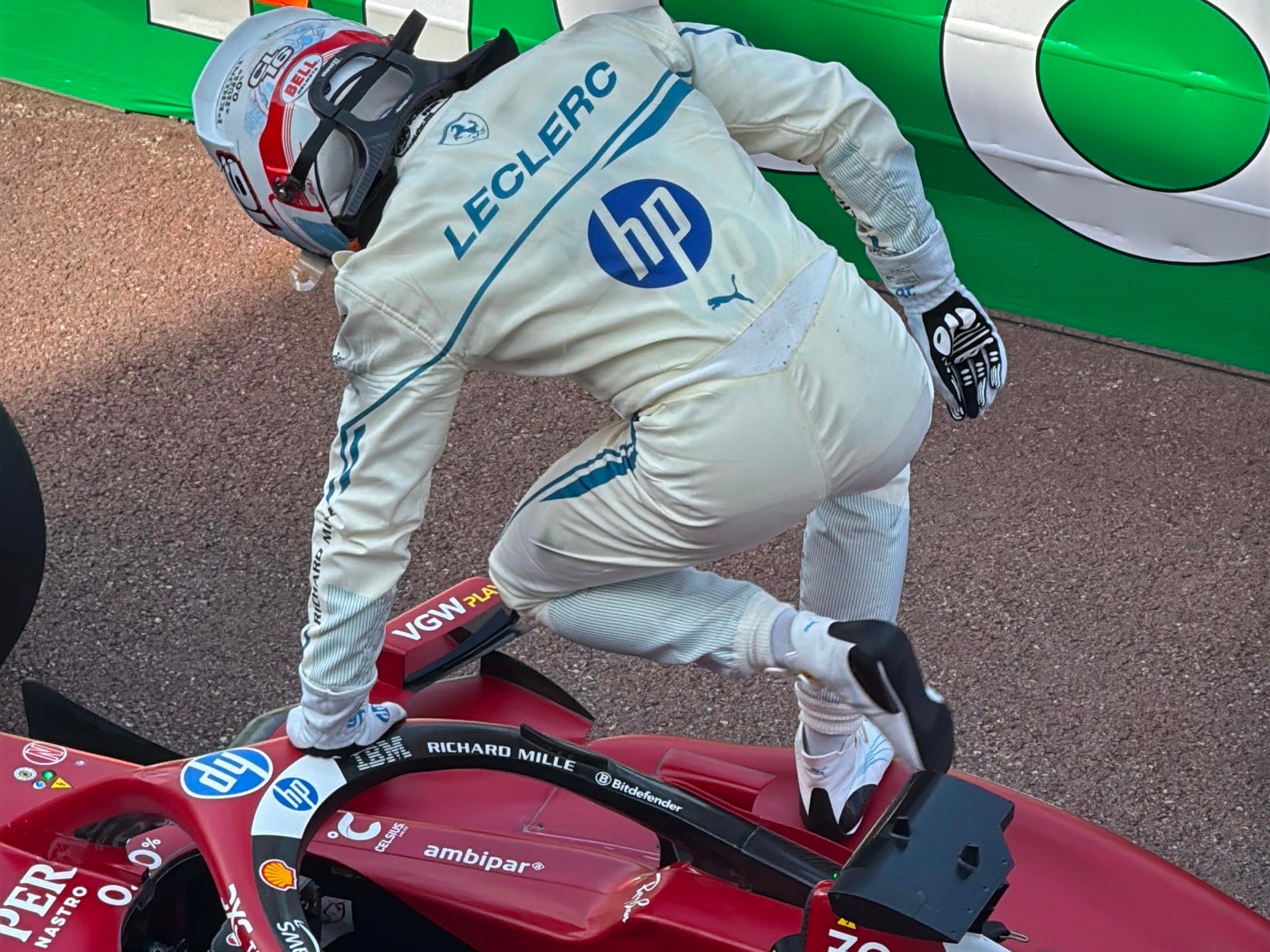
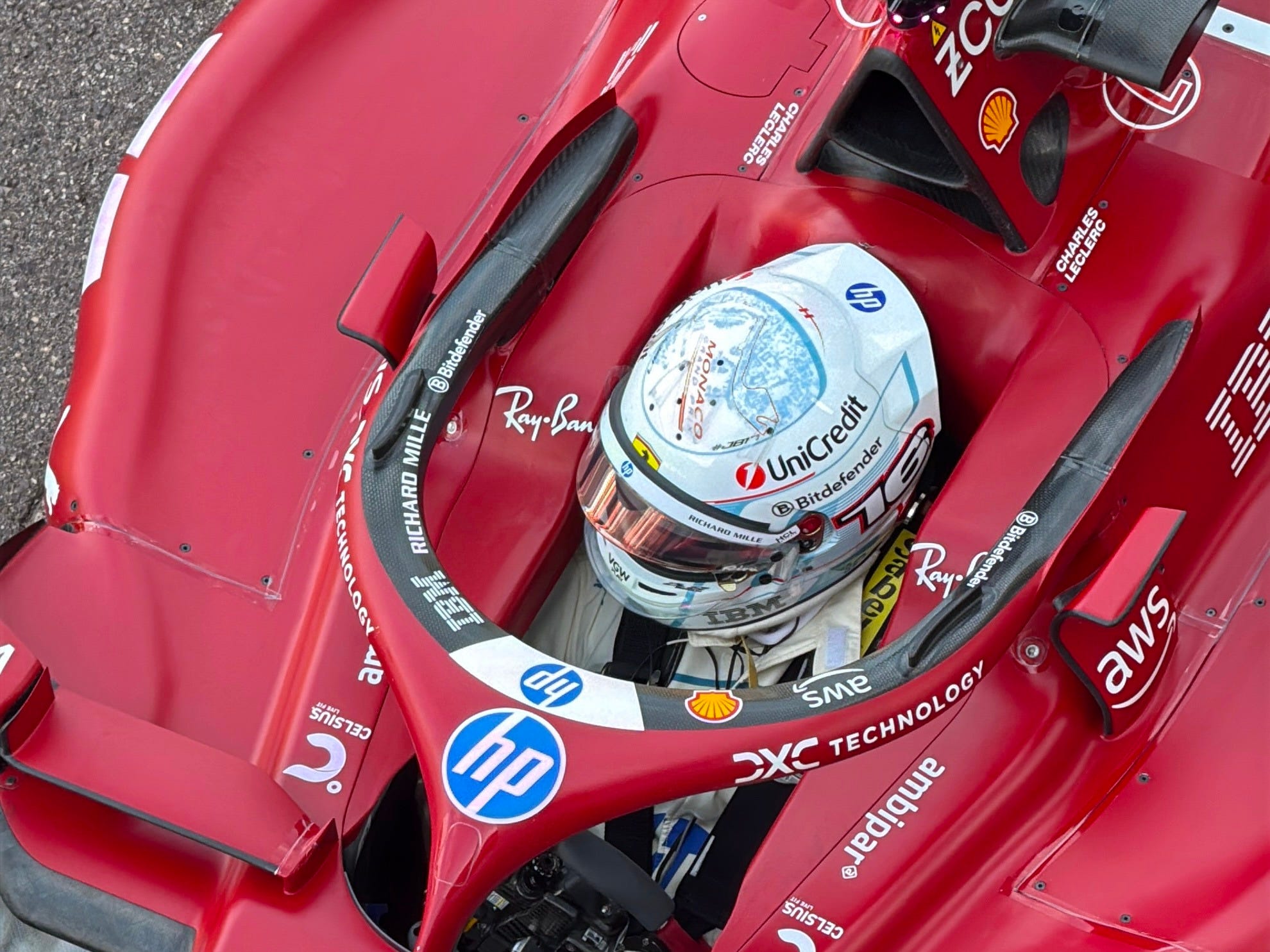
Bitdefender became a Team Partner of Scuderia Ferrari in September 2022, and by 2023, the partnership expanded to include direct cybersecurity collaboration. This wasn’t just about logo placement on race suits, though Bitdefender’s brand now appears on driver helmets, the halo safety device, and team apparel, symbolically linking safety on track with security off it.
The real work happens behind the scenes. Ferrari integrated Bitdefender Advanced Threat Intelligence into its Security Operations Center to help security analysts validate and triage alerts more efficiently, improve threat hunting, and accelerate incident response. In practical terms, this means Ferrari’s security team can spot suspicious network activity, unusual login attempts, or data anomalies before they escalate into full-blown breaches.
And in a world where both cars and operations become more connected, cybersecurity isn’t just a technical necessity - it’s often seen as a foundation for innovation and performance. You can’t push technological boundaries if you’re constantly worried about digital threats.
The travelling data centre challenge
One of the unique challenges facing F1 teams, and maybe the one that has fascinated me the most, is mobility. They’re not operating from a single, secure facility with controlled access and standardised protocols. Instead, they’re building and rebuilding a travelling data centre at 24 different circuits across six continents every year.
One week, they’re in Monaco. Next, they’re in Montreal. Then Singapore. Las Vegas. Qatar. Abu Dhabi. Each location brings different networks, varying regulations, inconsistent infrastructure, unique weather patterns, and new vulnerabilities. Yet the operation never stops. Engineers in Maranello need real-time access to data from Australia, for example. Strategy decisions made in a hotel room on-site needs to be secure. A single compromised tablet connected to public WiFi could bring down an entire race operation.
This is where partnerships like Bitdefender and Scuderia Ferrari HP prove essential. Teams need security solutions that travel with them - we are talking encrypted cloud transfers, locked-down remote access, VPN protection for every connection, and real-time threat monitoring that works whether you’re at the factory or in a paddock halfway around the world.
Real-time threat detection: the digital pit wall
Teams monitor thousands of data points in real time, reacting immediately when something’s off - even by a few tenths of a second - because hesitation costs points. Cybersecurity requires the same vigilance.
Modern threat detection isn’t just about blocking known malware. It’s about spotting anomalies: an unusual login from an unexpected location, a spike in network traffic that doesn’t match race weekend patterns, a file behaving suspiciously, an email from a sender whose address is slightly wrong.
Bitdefender provides Scuderia Ferrari HP with full threat context and indicators of compromise surrounding advanced persistent threats, phishing attempts, malicious domains, and command-and-control servers. The system learns normal patterns and flags deviations - essentially waving a digital red flag before the damage is done (I had to get at least one racing pun in here somewhere).
Every race weekend is like a perpetual qualifying session for cybersecurity: analysing, compiling, protecting your position, all while the world watches and competitors circle.
The partnership advantage
The collaboration between Bitdefender and Scuderia Ferrari HP reveals a broader truth about modern cybersecurity: even organisations with world-class in-house expertise benefit from specialised partnerships. Scuderia Ferrari HP employs some of the brightest engineers, yet they recognised that cybersecurity requires dedicated focus, constant vigilance, and access to global threat intelligence that only specialised partners can provide.
Bitdefender CEO Florin Talpeș emphasises that in Formula 1 as in cybersecurity, success is driven by speed, precision, and innovation - and powered by trust. That trust allows Scuderia Ferrari HP to focus fully on racing activities while knowing their digital infrastructure is protected by experts whose sole job is staying ahead of evolving threats.
For businesses and individuals, the lesson is clear: cybersecurity isn’t about having all the answers yourself. It’s about having trusted partners who bring expertise, resources, and vigilance to the constant battle against digital threats.
The race never ends
In Formula 1, there’s always another race, another development push, another championship to chase. The same is true in cybersecurity. Threats evolve daily. New vulnerabilities emerge constantly. Attack methods become more sophisticated by the week.
This isn’t just about protecting data - it’s about enabling innovation, maintaining competitive advantage, and ensuring that when drivers hit the track at 320 mph, the only thing the team needs to worry about is going faster.
Whether you’re an F1 team protecting race-winning strategies or an individual protecting personal information, the principle remains the same: in our connected world, security isn’t a luxury - it’s the foundation that makes everything else possible.
The invisible race behind the race continues. And just like on track, the teams with the best preparation, the strongest partnerships, and the most advanced technology will be the ones crossing the finish line first.