

Thank you for being here. You are receiving this email because you subscribed to Idée Fixe, the newsletter for curious minds, read by young and affluent insiders in motorsport.
I’m Toni Cowan-Brown, a tech and F1 commentator and the Editor-At-Large at Esses Magazine. I’m a former tech executive who has spent the past six years on the floor of way too many F1, FE, and WEC team garages, learning about the business, politics, culture and technology of motorsports.
⏳ Reading time: 8 minutes
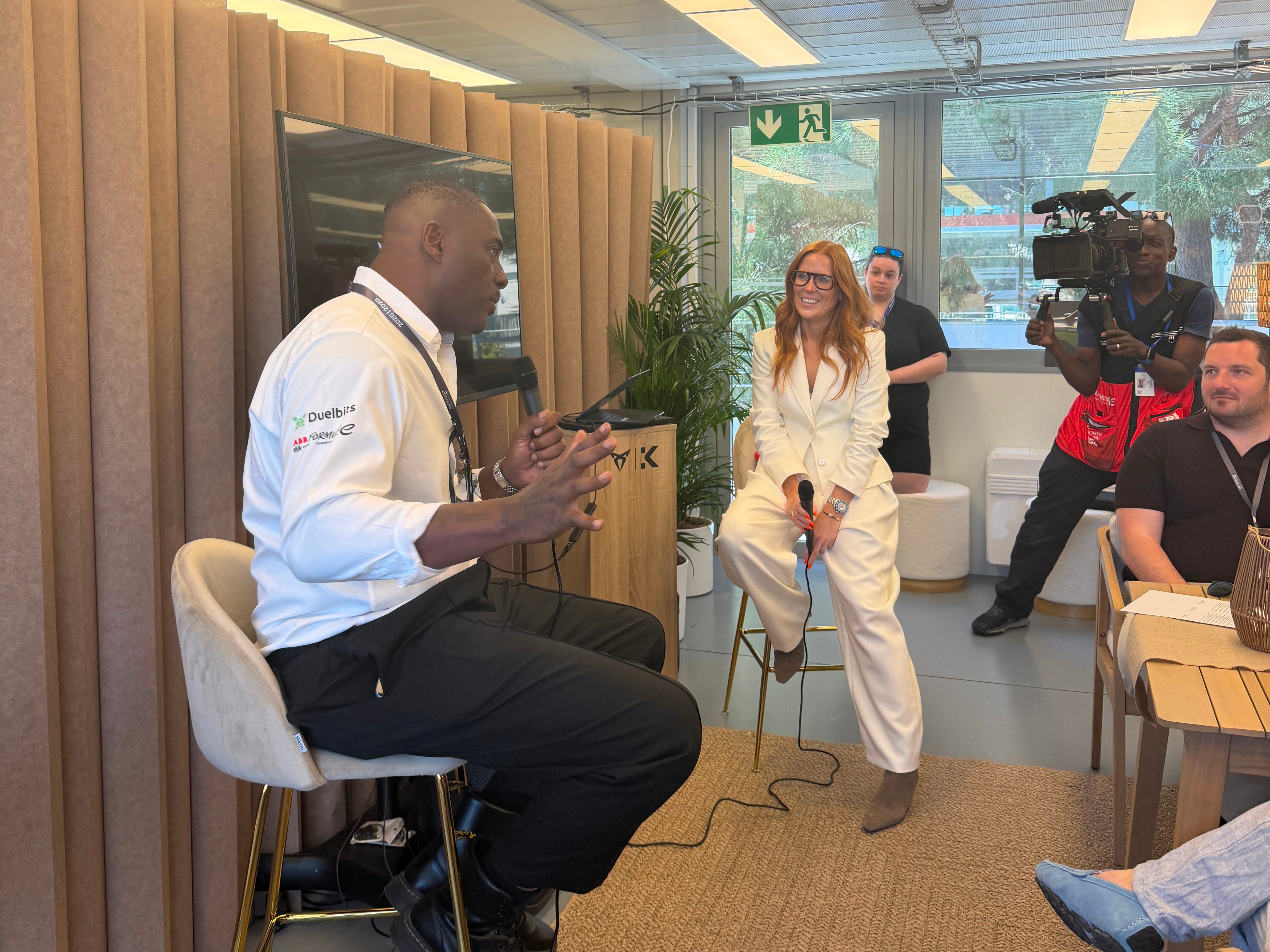
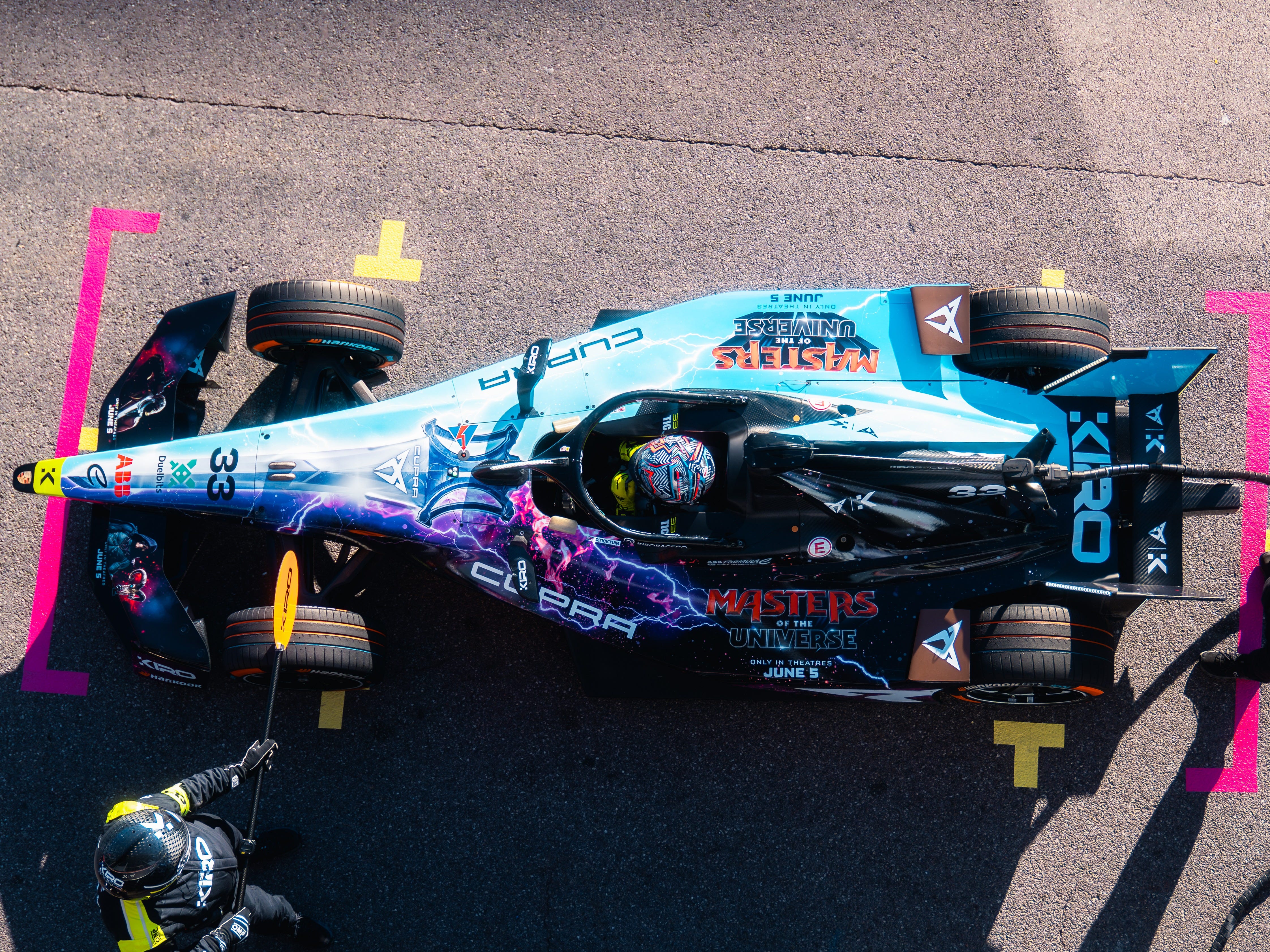
There was a moment during the Monaco E Prix that crystallised everything you need to know about what CUPRA KIRO is trying to build. As I mentioned in my previous newsletter, I spent last weekend in Monaco for the E Prix, working with the team on their partner day. A day that took place at one of the most photographed circuits in the world and one of the most storied pieces of tarmac in motorsports. The CUPRA KIRO car carried the livery of Masters of the Universe - the Amazon MGM blockbuster starring Sir Idris Elba, due in theatres on June 5th. Elba also co-owns the team. The car was, quite literally, a moving advertisement for his movie - paraded through Casino Square, through the tunnel, past the harbour, in front of a global broadcast audience.
This is not how motorsport has traditionally worked. This is how entertainment companies work. And that distinction is what struck me as interesting and worthy of a discussion. I spent this past week trying to peel back the layers of it all and put words to what I noticed that weekend.
"What we saw that other people maybe didn't see - they weren't really paying attention to the technology story. How crazy is it that a sport is going to undergo a transformation that's going to make it technologically, but also from a product and entertainment perspective, be on the same playing field as its big brother championship? People are missing it because they're stuck in the way of thinking - electric vehicles, that's not cool. But what people are going to see in Gen 4, especially, is cars that are faster than Formula One cars in many respects." - Jeremy Tarica, President of The Forest Road Company
Note: This isn’t a sponsored post, but I did get a front-row seat in Monaco to the CUPRA KIRO team while I hosted their partner day. I also got some time with both Sir Idris Elba and the President of The Forest Road Company, the investment firm that acquired the team. And it’s a topic I couldn’t wait to dig into
The new ownership class
Vanity Fair recently noted what anyone paying attention to sport already knows: owning a team has become the defining status symbol of the cultural moment. Ryan Reynolds and Rob McElhenney bought Wrexham for $2.5 million in 2021. It’s now valued in the hundreds of millions, with a Disney+ docuseries that has made the club globally recognisable. LeBron James’ stake in Liverpool has grown into a position within Fenway Sports Group. David Beckham built Inter Miami from scratch. The owner’s box is the new front row in many ways.
But the smarter observation isn’t about status. It’s about structure. What’s actually happening - underneath the celebrity angle, underneath the lifestyle aesthetics - is a fundamental reorganisation of what a sports team is. I’ve mentioned this a few times now, but any Paddock these days (not just F1) has become a content studio - wherever you look, there is content being filmed, edited and produced.
The old model: a team is a competitive entity. It wins or loses. Its value is roughly proportional to how often it wins.
The new model: a team is a media company with a competition attached. It produces content, builds audiences, creates cultural moments, and generates commercial inventory. Winning helps. But winning isn’t the whole game anymore. I also discussed this at Web Summit a few weeks ago with the CMOs of Aston Martin and Cadillac.
The NBA figured this out first, as it usually does, opening the door to private equity investment in 2021. The NFL followed in 2024. And the teams that are getting built right now - with entertainment capital, media executives, and cultural figures at the table alongside the traditional sports money - reflect a different thesis entirely.
What makes KIRO different
Forest Road Company acquired what is now CUPRA KIRO in October 2024. On paper, they bought a Formula E team that had spent years at the back of the field. What they actually acquired was a founding asset in a championship that is structurally positioned for the next decade of growth, and they built an investor group around it that looks less like a motorsport consortium and more like a deliberate media and entertainment play.
The names: Ares Management co-founders David Kaplan and Bennett Rosenthal. Tony Ressler, who owns the Atlanta Hawks. Larry Berg and Bennett Rosenthal’s LAFC money. Media executives Steve Bornstein, Rick Hess, Navid Mahmoodzadegan. And Idris Elba - actor, DJ, producer, founder of Green Door Pictures, Apple TV+ partner, and now, as of January 2026, Sir Idris Elba.


Speaking with Forest Road’s President, Jeremy Tarica, it quickly became obvious that none of this happened by accident.
"We actually had an opportunity to buy a different team in Formula E that was in maybe a little bit more stable footing”, says Tarica, “but we felt like what would be amazing is you tie Idris and a television show and that story and that vision, and then you can start from scratch and go from the very, very bottom of the grid and take everyone on the ride with you. That was a more interesting proposition."
The point of that room isn’t decorative. Each of those investors brings something the others don’t. Sports franchise infrastructure. Hollywood distribution relationships. Streaming platform access. Brand architecture. Cultural reach. These are people who understand that nothing succeeds in a vacuum. The thesis is that a Formula E team, built correctly, isn’t just a racing operation - it’s a content engine with a global calendar of activation points, sitting inside the fastest-growing motorsport series on the planet.
The Masters of the Universe livery in Monaco is the proof of concept. A $170-200 million studio film used a race car in one of the world’s most cinematic locations as part of its global press campaign, two weeks before theatrical release. That’s not a sponsorship deal. That’s vertical integration - an investor using his own team to promote his own film. The car as a media asset. The race weekend is a production window. Elba may be the only investor in motorsports with his face on the side of the car.
Why Formula E specifically
I spent quite some time in Monaco talking about why motorsports, and specifically why Formula E. The instinct might be to ask: why not F1? The answer, in my opinion, is simultaneously obvious and underappreciated.
Formula 1 is already priced like what it is - one of, if not the most valuable motorsport properties in the world. Sponsorship revenue across the grid hit a record $2 billion in 2024. The entry cost for a meaningful partnership is extraordinary. The inventory is spoken for. You are not getting in early at that table.
Formula E’s cumulative global audience, according to the series, reached 561 million in Season 11 - up 14% year on year. The fanbase grew from 304 million to 386 million in 2024 alone. Liberty Global, which emerged from the same stable as Liberty Media - the company that bought Formula 1 and transformed it - is now the championship’s majority shareholder. Ellie Norman, the CMO who oversaw F1’s post-Liberty commercial renaissance, now runs marketing for Formula E. The structural conditions for the next phase of growth are being assembled in real time.
And next season, the GEN4 car arrives. 815 horsepower. Permanent all-wheel drive. 0-60 in 1.8 seconds. A machine that Formula E’s own CEO described as “a bold declaration of our ambition.” The championship has been quietly becoming something genuinely fast and genuinely spectacular, and the car that arrives for Season 13 makes that argument unmissable.
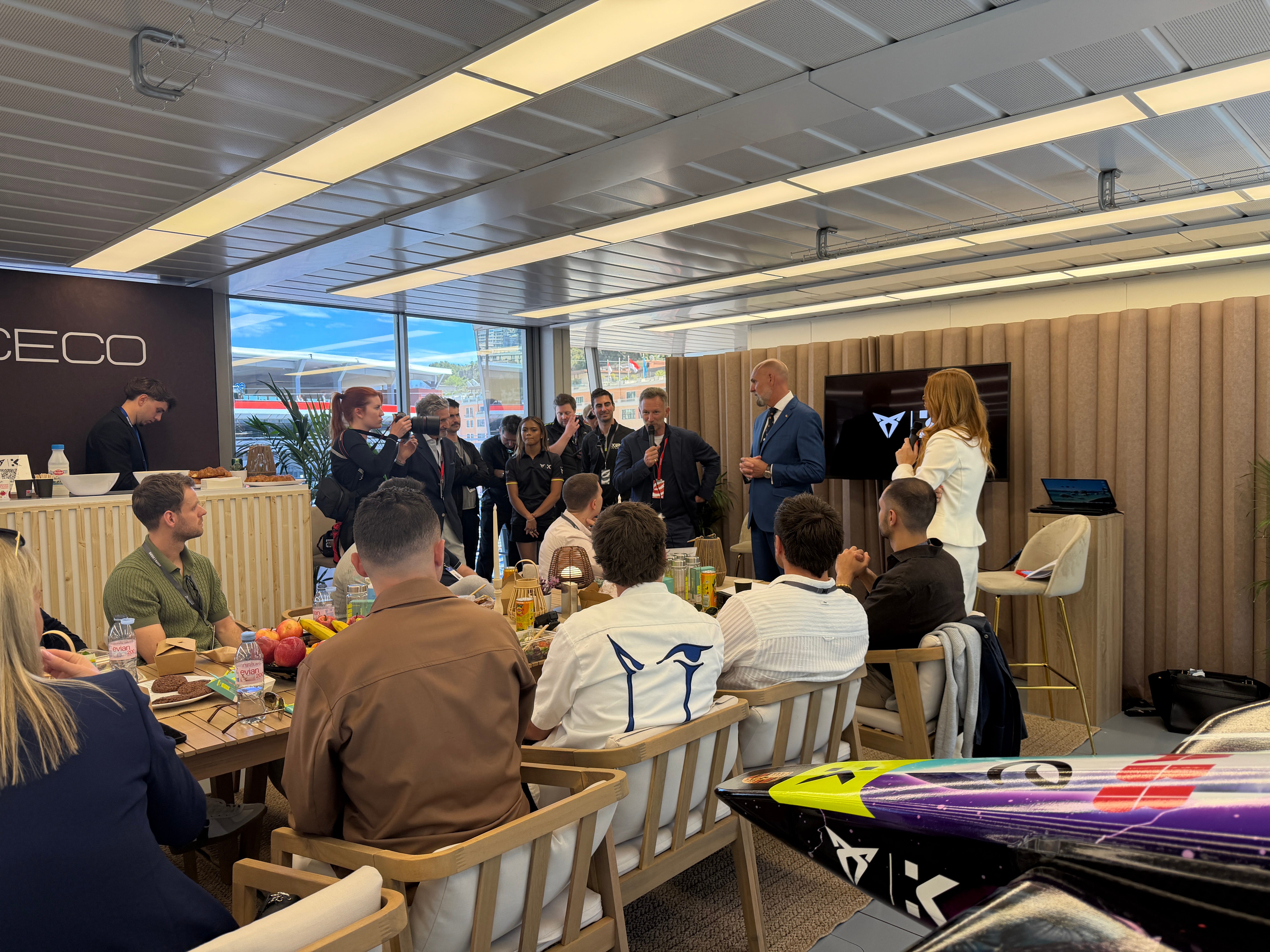
The investors who moved early on Formula 1’s Liberty era made extraordinary returns. The window for Formula E is now, which is precisely what Mike Fries and Christian Horner (two surprise guests of the afternoon) told this room of potential CUPRA KIRO partners.
The deeper point
Finally, the Vanity Fair piece gets at something real when it observes that sport is one of the last things that has to happen in real time. AI can generate a song, synthesise a film, and engineer influence. But a race in Monaco still has to be run. The moment Dan Ticktum overtakes at Sainte Dévote still has to happen on a Saturday and/or Sunday afternoon, live, with everything at stake. And it’s hard to describe and put into words that electric feeling of a group of strangers coming together to experience this live, whilst simultaneously sharing this moment with the team.
What that means commercially is that the people who control sport don’t just own a team. They own a moment. And moments, in a media landscape of infinite on-demand content, are the scarce thing.
Tarica explained this clearly to me on our call, "Premium IPs have been appreciating in tremendous value. When you buy the Lakers, or you buy any of these sports properties, you're buying what should be an evergreen piece of IP that is very much monetizable. The smart money has said - where are things going?"
What CUPRA KIRO seems to understand - more clearly than most teams - is that the racing is the foundation, but the story is the product. The investor group is part of the story. The Monaco livery is part of the story. The development driver with 2.4 million Instagram followers is part of the story. The rookie Spanish driver managed by Fernando Alonso’s group is part of the story. Idris Elba is part of the story.
I spent a day with this team in Monaco. What struck me wasn’t the car, though the car is increasingly impressive. It was the intentionality. The sense that every element - the driver lineup, the investor roster, the commercial partnerships, the content strategy - had been assembled to make a specific argument about what a modern sports franchise can be.
Most teams are racing organisations that have learned to do content. CUPRA KIRO is building something where the content and the competition are designed together from the beginning. Whether they win the championship is a separate question. Whether they’ve identified something true about where sport is going, that one seems increasingly settled. The car that carried a blockbuster film’s branding through the streets of Monaco last weekend wasn’t a sponsorship activation. It was a statement of intent.



Toni is a commentator covering motorsport, tech, media and culture. She is Editor-at-Large at Esses magazine and host of Another Podcast.