


Thank you for being here. You are receiving this email because you subscribed to Idée Fixe, the newsletter for curious minds. I’m Toni Cowan-Brown, a tech and F1 commentator. I’m a former tech executive who has spent the past five years on the floor of way too many F1, FE, and WEC team garages, learning about the business, politics, and technology of motorsports.

⏳ Reading time: 5 minutes
Shift Happens, weekly pivots where motorsport collides with tech and culture. A quick roundup of the headlines in and around motorsport you should be aware of. I hope you enjoy this new curated format.
Another Podcast. For those who are new here, I’ve been hosting a tech podcast for over four years now with tech analyst Benedict Evans. For the past year, our conversations have very much centred around AI - because at this point, there is nothing as complicated and fascinating in tech.
The lead lap
The Concorde Agreement: Formula 1’s constitutional foundation renewed through 2030. As a quick refresher, the Concorde Agreement is the binding contract between the FIA (motorsport’s governing body), Formula 1’s commercial rights holder, and the teams that dictates how they compete in races and how television revenues and prize money are distributed. Named after the Place de la Concorde in Paris, where the first agreement was hammered out in 1981, this document represents Formula 1’s constitutional foundation. That original deal ended the bitter FISA-FOCA war, a power struggle that had threatened the sport’s commercial viability and even led to race cancellations. After thirteen hours of negotiation, all parties signed the first Concorde Agreement, which required teams to appear and compete in every race to assure television audiences they would have races to watch. The terms have traditionally been kept strictly confidential, though they’re understood to cover everything from calendar structure and prize money distribution to entry fees and governance procedures.
The ninth edition of the Concorde Agreement was finalised in two stages throughout 2025. In March, all eleven teams signed the Concorde Commercial Agreement ahead of the Australian Grand Prix, with Formula 1 confirming the sport had “never been in a stronger position.” Then on December 12, the FIA and all teams signed the Concorde Governance Agreement, completing the package that will run through 2030. This timing is significant - the commercial terms were settled first, presenting a united front from teams and Formula One Management before the FIA negotiated its governance role.
Why This Agreement Matters. The 2026-2030 Concorde Agreement arrives at a pivotal moment for Formula 1. The sport is experiencing unprecedented commercial growth, and this deal cements stability as it enters a new regulatory era with sweeping technical changes, including revised hybrid power units and active aerodynamics. A newly defined percentage of F1’s revenues will be allocated to the FIA, with funding intended to bolster race direction, stewarding, and technical development. This addresses persistent calls from drivers and teams for more consistent officiating, such as permanent steward panels rather than rotating officials.
Under the new governance structure, team entry fees will now scale based on championship position (worth approximately $9 million per midfield position), bringing them in line with how prize money is distributed. The agreement also accommodates Cadillac’s entry as the eleventh team in 2026, expanding the grid while maintaining the financial protections for existing constructors that were introduced in the 2021 agreement.
The number of the week
19.9% is the minority stake that ByteDance will retain once the new TikTok deal is closed.
Incredibly silently, it looks like TikTok has just signed a deal to create a U.S. joint venture with American investors, with a target closing date of January 2026. More specifically, Oracle will be the anchor partner in the deal, leading a buyer group that includes the Abu Dhabi-based MGX and the private equity company Silver Lake. One thing I noticed is that all three TikTok buyers have direct or family-linked connections to Formula 1 - Oracle as Red Bull's title sponsor, Silver Lake as a major investor in the Al Nahyan family's Manchester City (whose family hosts the Abu Dhabi GP), and MGX as an investment vehicle of that same royal family.
These connections reveal some fascinating dynamics about where tech, sports, and geopolitical influence intersect. The Al Nahyan family's involvement through both MGX and their existing F1 presence (via the Abu Dhabi GP) reflects a broader Gulf strategy of using sports and technology investments to diversify away from oil dependence. They're not just hosting races - they're becoming stakeholders in the digital infrastructure (TikTok) that drives global sports consumption. This vertical integration is strategic: own the venue, influence the platform where fans consume content about that venue.
Three stories that need to be on your radar
Helmut Marko is out. Christian Horner rumours galore. Red Bull Racing is experiencing a leadership transformation just as Formula 1 enters one of its most significant regulatory overhauls in decades. Following the conclusion of the 2025 campaign, Red Bull announced that Marko will leave the team six months after Team Principal Christian Horner departed. During his tenure, Marko oversaw the progression of 20 drivers to Formula 1, including Verstappen and Sebastian Vettel who won eight world titles between them. However, the departure wasn’t entirely amicable. The relationship between Marko and the Red Bull organisation had become strained after the death of Red Bull co-founder Dietrich Mateschitz in late 2022. Most recently, Red Bull CEO Oliver Mintzlaff moved to distance the company from Marko’s explosive remarks, where he accused Christian Horner of “dirty games” and suggested Verstappen would have won the title had Horner been removed earlier. Speaking of Horner, his potential return has become one of the paddock’s hottest topics. Horner agreed a $100 million settlement with Red Bull, which will allow him back in the paddock as early as next spring, and he is seeking business partners who might help him buy a stake in a team that would return him to a significant role of power. The sport will see its biggest shake-up to the technical regulations for several decades in 2026, with the debut of Red Bull Ford Powertrains on track. Yet dismissing Red Bull would be foolish. They’ve proven resilient before, and Verstappen remains one of the grid’s most formidable competitors. The question isn’t whether they’ll be competitive, but whether they can hit the ground running in an era where early advantages could compound across the five-year regulation cycle. With Mercedes’ engine expertise, Ferrari’s development resources, and Honda’s partnership with Aston Martin all threatening to shake up the established order, 2026 promises to be one of Formula 1’s most unpredictable seasons in recent memory.
The lost art of 90s courtside & trackside fashion. Somewhere between athleisure and luxury streetwear, we’ve collectively forgotten that the 1990s delivered the greatest era of sports spectator fashion. It’s time we acknowledged the crime of letting it slip into obscurity. Courtside at the NBA, you had Spike Lee in Versace shirts loud enough to distract free throws, Jack Nicholson in sunglasses that cost more than season tickets, and an entire generation that understood showing up to watch sports was itself a performance. The sidelines demanded oversized blazers with T-shirts, chunky gold jewellery that caught the arena lights, and an unshakeable confidence that dressing down meant vintage denim and pristine Air Jordans. Trackside was no different. Formula 1 paddocks hosted a parade of supermodels in slip dresses and celebrities in leather jackets that somehow worked in Mediterranean heat. There was no pretence of “functional” fashion - you dressed like you mattered because being there mattered. Today’s courtside aesthetic -hoodies, minimalist sneakers, muted tones - feels safe by comparison. And the trackside fashion we are seeing feels forced and out of place. The 90s understood something we’ve forgotten: when you’re watching greatness, you should look like you belong in the moment. Bring back the chaos.
Why creator-journalists, not brands, will get invited to the party. Not a motorsports-specific story, but as the F1 launch season looms upon us, I’ve noticed a shift away from traditional media-only invites to such events, to a much broader scope where creator-journalists and creator partnerships seem to be taking a front seat. This piece argues that journalism's future belongs to individual personalities, not institutional brands. The analysis draws on Reuters Institute data showing audiences increasingly trust personalities over traditional news brands, craving human connection in an algorithmically-curated content flood. The implications are stark: legacy media organisations that fail to recognise this shift risk becoming irrelevant as their most talented voices walk out the door, taking their audiences with them. It's a paradigm shift that rewrites the power dynamics between journalists and the institutions that employ them. LINK
One video worth your time
One [event] that caught my eye
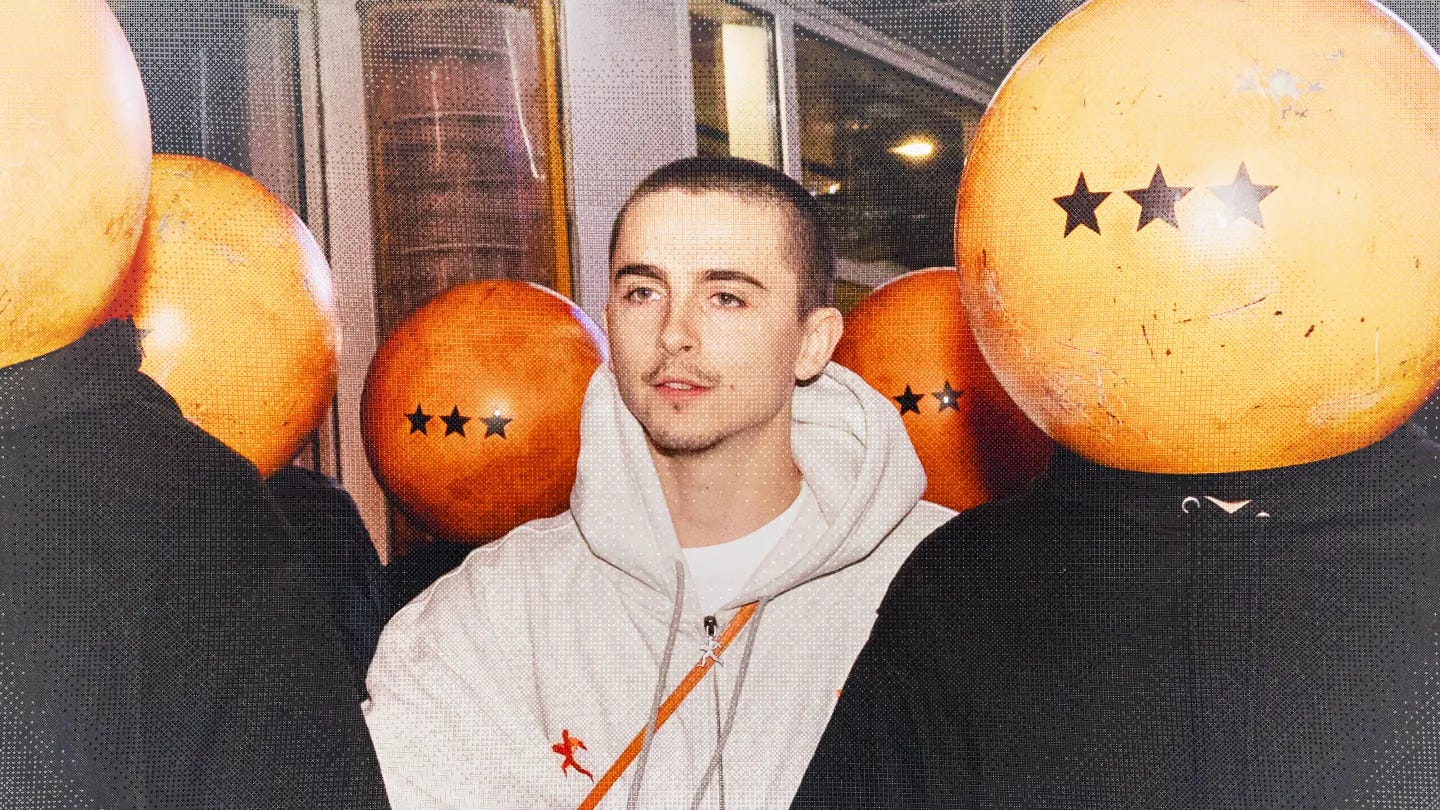
This week, Timothée Chalamet became the first person to ever stand atop the Las Vegas Sphere, with the venue's massive LED exterior transformed into a giant orange ping-pong ball promoting his Christmas Day release, Marty Supreme. The stunt is brilliant and finally, someone has gotten really creative with the Sphere.
This stunt capitalises on the Sphere's cultural moment - the $2.3 billion venue has become social media catnip since its 2023 opening, generating viral moments simply by existing. It also perfectly embodies the film's central theme. As Chalamet told Jimmy Fallon, Marty Supreme is about sacrifice in pursuit of a dream and serves as an antidote to bleakness for young people, encouraging them to believe in themselves and dream big. What better way to literalise "dream big" than by standing atop the world's most expensive entertainment venue? The stunt also cuts through the noise in an era when A24 is competing against algorithmic content and repurposed franchise tentpoles. In a media landscape drowning in safe, manufactured moments, putting a movie star in a harness atop a giant glowing orb is refreshingly unhinged and audacious - and that's precisely why it works. LINK