


Thank you for being here. You are receiving this email because you subscribed to Idée Fixe, the newsletter for curious minds, read by young and affluent insiders in motorsport.

⏳ Reading time: 7 minutes
Shift Happens, weekly pivots where motorsport collides with tech and culture. And a quick roundup of the headlines in and around motorsport you should be aware of, as they explain the cultural shifts we are seeing in this space.
I’m back in California; well, technically, I’ve been back for two weeks now and have yet again struggled to get the past couple of newsletters out. On the one hand, I’ve felt depleted by the internet, where I feel like everything humanly possible has been turned into a witch hunt, when really it’s just bottled-up sadness and jealousy. And then there is the challenge that so much looks and sounds the same. So much of the content is an ad for something, even though sponsored content is dying and rightly so as it has become so stale. And a lot of this is probably due, in part at least, to the fact that the internet now has more bots than people for the first time in history. So there’s that. But mostly, I think, like all of us, I needed a little break.
The [lead] lap
Everyone covering Formula 1’s growth right now is telling the same two stories side by side, as if they happen to be running in parallel, and it’s driving me absolutely nuts. It’s almost starting to feel like we are going out of our way to keep the two sides of the same coin somehow separate, as if one wasn’t deserving to be a part of the other’s story.
Story one: the audience has changed. Over 40% female (the number fluctuates between 41% and 43% depending on who you speak with). Younger than the sport has ever seen. Women aged 18-24 are the fastest-growing group in the fanbase, and it’s happening everywhere at once, not in one market.
Story two: the sport is finally profitable - not just at the championship level, but team by team (all except Cadillac, which just joined, are believed to be financially profitable), in a business that spent decades bleeding money to stay on the grid. Both stories get told constantly, but they are not two stories. They’re one, and the same.
The instinct is to treat culture and commerce as separate ledgers - one measures who’s watching, the other measures who’s paying. That split makes sense for a sport whose audience hasn’t moved in a generation. But it absolutely stops making sense the moment the audience itself becomes the asset. A fanbase that is younger, more female, and genuinely global isn’t a nice side effect of good racing. It’s the thing sponsors have been trying to buy access to for a decade and mostly failed to find. It’s why the paddock now doubles as brand activations, why fashion and beauty are in rooms that used to be all engine oil and telemetry, why a helmet collaboration or a hospitality suite can move as much conversation as a podium finish.
Profitability didn’t happen to the sport despite this shift, or beside it. It happened because of it. Treating them as parallel stories keeps the analysis comfortable. It lets the sport talk about culture in one breath and money in the next without ever having to admit that the money followed the culture, not the other way around. But if you actually want to understand why Formula 1 looks and earns the way it does right now, you have to stop measuring cultural relevance and economic growth on separate axes. Full video here. LINK
What I told [my clients] this week
The liveries on F1 cars give you a good read and understanding of where society is at in that moment in time - from the Marlboro era, to alcohol, fashion, oil, tech, crypto, and now, big tech and AI.
Every single team on the grid now has an AI partner (not almost every team, all eleven teams have at least one AI partner). But what’s interesting is that the AI companies are using the F1 teams to sell a human story (to reach a general audience), not a tech story. There is lots to unpack here.
Three [stories] that need to be on your radar
I made an IG post with a list of all the fashion houses and brands taking over this summer in Europe. Fashion’s move into beach clubs, restaurants, and wellness spaces isn’t about food or lounging; it’s about buying real estate in someone’s memory. A billboard gets three seconds. A branded cabana gets an entire afternoon: the towel, the photographed drink, the tote you carry home. Brands aren’t selling a collection anymore; they’re renting out a mood and letting you live inside it a far stickier pitch than anything printed on a wall. And some of these brands have absolutely understood this and are planning on staying front and centre in your mind all summer long. It also tracks with where attention actually lives now. Younger consumers treat spending as identity-building, paying for experiences that photograph well and signal taste. A pop-up beach club does double duty: it’s a content machine (every guest becomes a distribution channel) and a physical extension of brand storytelling — the venue is the campaign. It also solves a real problem for luxury houses: collections drop twice a year, but relevance has to be constant. A beach club keeps a brand in the conversation without needing a new product to justify it. Where it tips into commercial takeover territory is when the “story” is just logo density, when the club exists to sell a $40 branded spritz cup rather than make you feel something.
Why is sports the only “entertainment” product and production that AI can’t take over? This is absolutely a piece worth reading, and another way of explaining what so many of us know to be true - there are very few moments and events that need to be experienced live these days. And big sporting events are one of those; elections are another. One is exciting, breaks down boundaries, has the power to unite and is a marketer’s and brand’s dream. The other too, to a certain degree, I guess. LINK Other great thoughts about tech and sports. LINK
Formula 1 has a new safety car, Aston Martin no longer shares the duties with Mercedes, who are now, once again, the sole providers of both the safety and medical cars, and it got me thinking about the business case for running a safety car and sponsoring it. See, CrowdStrike became the “Official Mercedes Safety Car Partner” in 2021, piggybacking on a team sponsorship that dates to 2019 and still sponsoring it today. The marketing exposure is no joke. The safety car is the only vehicle guaranteed to appear at all races regardless of competitive form, as the exposure is decoupled from results. It also gets uncontested screen time in a frame with no competing logos.
One [video] worth your time
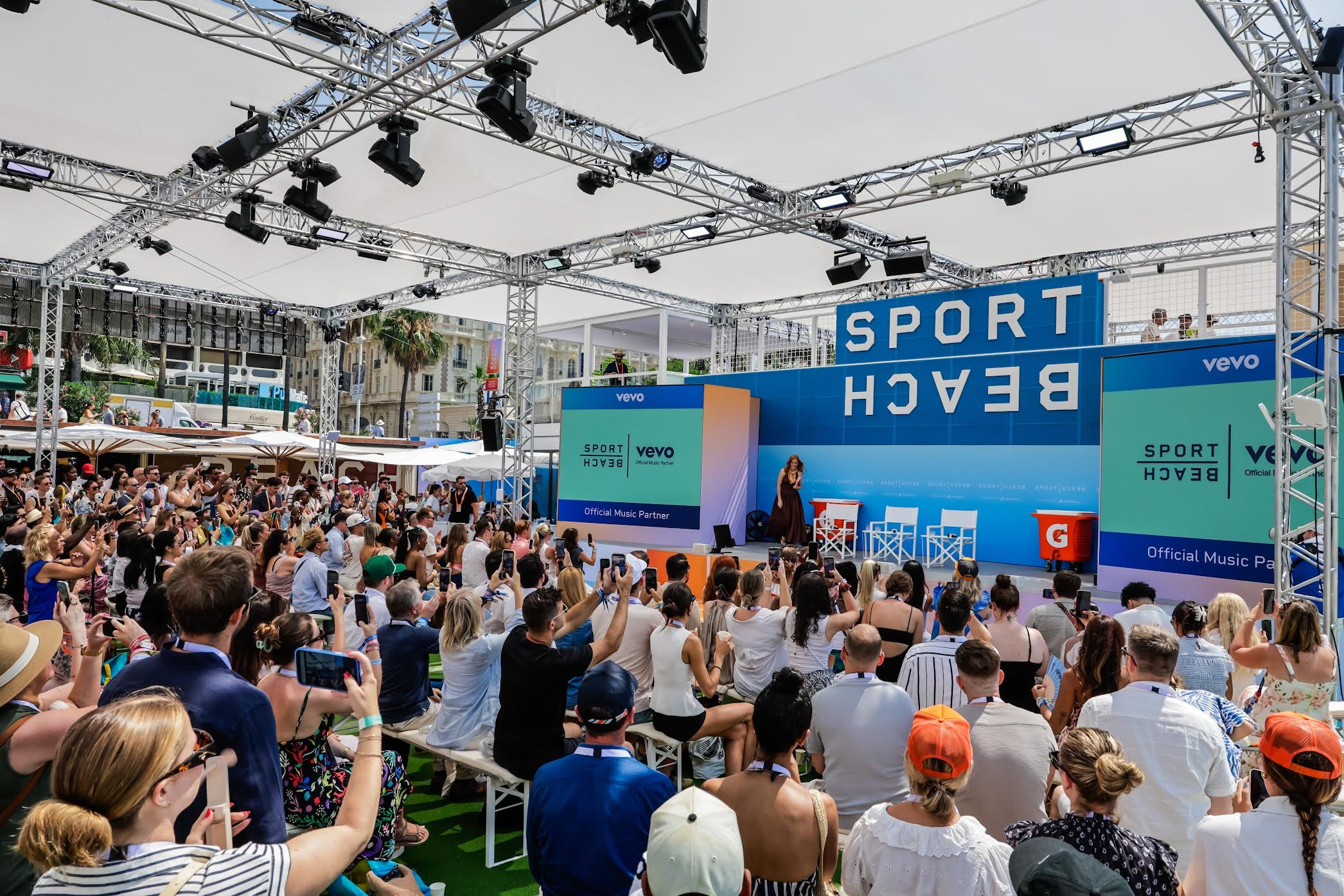
I sat down with Kaya and Jasmine from Scalable at Cannes Lions, and we had a phenomenal discussion about the influencer and creator boom in F1 and sports in general. Conversations like these are needed now more than ever, especially when we are seeing a surge of ‘anti-influencer’ sentiment, which is just code for we don’t want the girls and the women here. Or rather, we want your money and relevance, but not you.
As a side note, Cannes Lions was magical and everything I wanted and needed it to be. And one of my takeaways from my week in the South of France is that we will see a lot more F1 teams, motorsports content, F1 itself and F1 creators show up in a big way in the years to come.
[Bon goût] - for those with an acquired taste.
I’ve said this time and time again: attending F1 weekends has become overwhelming. Now I think these weekends were always overwhelming in and of themselves - a lot happens in a relatively short period of time, lots of people and stakeholders involved, things are constantly evolving and changing… That’s motorsports for you, regardless of teh job you do. But when I do WEC or FE race weekends, I find myself far less overwhelmed than during the F1 weekends. And there is one reason for this: the sheer number of partner activations, moments, dinners, drinks, galas, experiential activations… Now I know that my race weekends are somewhat unique in that I wear 3-4 hats - accredited media and written journalist, educational video production for teams or the FIA, sponsored content with partners up and down the paddock, influencer dinners and activities and speaking gigs. All requiring different skill sets, preparations, and part of my brain.
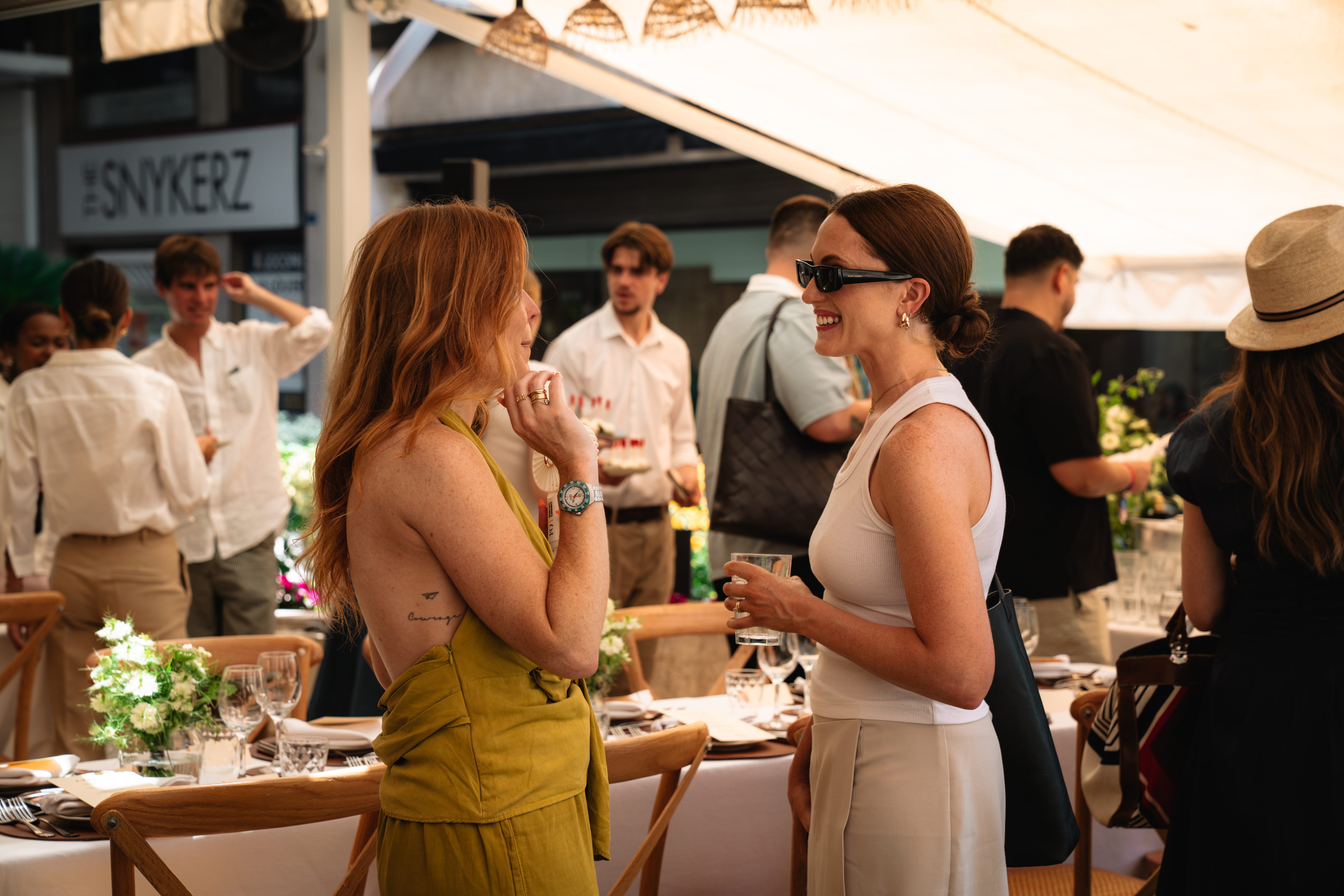
The partner and brand moments that have felt most valuable and inspiring have been the highly curated dinners, such as the moment Disney organised on the pit lane at Silverstone or the drinks and family-style dinner organised by the F1 Paddock and Soho Farmhouse to celebrate House 44. Those were moments of calm, in great company (both new and old acquaintances), with great food and conversations. I miss moments that were created for the actual moment and people in the room vs. the Instagram grid and the Complex post.
I’m Toni Cowan-Brown, a tech and F1 commentator and the Editor-At-Large at Esses Magazine. I’m a former tech executive who has spent the past six years on the floor of way too many F1, FE, and WEC team garages, learning about the business, politics, culture and technology of motorsports.
I like the way you connect the audience shift to the commercial expansion of the sport. It made me think that the relationship may be even broader. Both developments seem to trace back to Liberty’s decision to operate F1 as a global entertainment business around 2017. The investment in driver access, digital content, social storytelling, F1 TV, and Drive to Survive created more ways for younger and female fans to discover the sport. At the same time, the cost cap changed the economics by limiting how much of every additional dollar of revenue could be absorbed by competitive spending.
Fashion, apparel, beauty, lifestyle, and technology brands enter the sport, while at the same time, the cost cap allowed more of that expanding revenue pool to become margin and enterprise value. The newer audience helped expand the size and diversity of the opportunity, while the financial regulations improved F1’s ability to retain the value being created.
Drive to Survive is now less the primary engine than the spark that helped create a much larger discovery ecosystem. New fans increasingly seem to enter through creators, social media, family, fashion, gaming, or an individual driver. F1 no longer depends on one gateway into the sport.
The next challenge is retention. A younger and more diverse audience may attract sponsors, but long-term value depends on whether F1 can turn cultural entry points into lasting habits without making every race weekend feel like an overcrowded brand activation. The most valuable experiences may increasingly be the ones that create genuine belonging rather than simply producing the greatest volume of content.
Couldn't relate to your opening paragraph more regarding being a bit depleted by everything (everywhere you look it feels). You summed it up perfectly.