


Thank you for being here. You are receiving this email because you subscribed to Idée Fixe, the newsletter for curious minds, read by young and affluent insiders in motorsport.
I’m Toni Cowan-Brown, a tech and F1 commentator and the Editor-At-Large at Esses Magazine. I’m a former tech executive who has spent the past six years on the floor of way too many F1, FE, and WEC team garages, learning about the business, politics, culture and technology of motorsports.

⏳ Reading time: 8minutes
Shift Happens, weekly pivots where motorsport collides with tech and culture. And a quick roundup of the headlines in and around motorsport, you should be aware of, as they explain the cultural shifts we are seeing in this space.
The [lead] lap
There’s a debate running through the paddock right now - and through the fanbase - about whether the new F1 regulations have improved the racing or quietly broken something. It’s a fair conversation. It’s also one we’ve had before.
When technology changes, it rarely arrives polished. It arrives disruptively. Tennis is a useful (but not a perfect) parallel and one currently top of mind for me as I just got back from teh Monte Carlo Masters (more on that in a few). Lighter frames and polyester strings didn’t just update the game - they rewrote what was physically possible, producing a style of play that would have looked alien to the previous generation. The sport got harder to follow before it got easier to love. F1 is somewhere in that middle passage right now. Energy management has become a defining variable - battery depletion rates shift the strategic calculus circuit by circuit, and drivers are operating in a state of near-constant decision-making that has no real precedent in the sport’s history. More is in their hands than ever before. Some are adapting. Others are struggling. Whether you call that a problem or a feature depends almost entirely on how well you understand it.
What makes this moment interesting is the wider context it’s landing in. There’s a growing cultural appetite for things that feel tangible - analogue, legible, human. Vinyl, film cameras, iPods, and magazines are all making a comeback. Even the GT3 Revival Series I attended this weekend felt perfectly timed. People aren’t just nostalgic; they’re pushing back against systems they can’t see or fully understand. And AI is accelerating that tension, compressing the adaptation cycle to a pace that feels genuinely uncomfortable for most people. F1’s regulatory upheaval is one small data point in a much larger story about what happens when change outruns comprehension. It’s always messy first. Then it gets refined. Then we forget what we were so worried about.
The [number] of the week
$10 million is how much Justin Bieber got paid for his Coachella set. Although I couldn’t care less about Coachella as a commercial and marketing opportunity. I did think this set was interesting and highlights a desire for the simpler things - a theme I’ve been noticing in almost every aspect of life. This was not a content opportunity. Not a commercial obligation. It almost felt like a reset of sorts. The fans seem divided - you either were offended by its minimal production or you called it art and a reclaiming of sorts.
Three [stories] that need to be on your radar
JPMorganChase’s Athlete Council. Last month, JPMorganChase launched the Athlete Council - essentially an initiative to help athletes manage their finances from early career through retirement. The nine-member group is chaired by Dwyane Wade and includes Tom Brady, Sue Bird, Megan Rapinoe and A’ja Wilson. The problem is real: most pro athletes retire before 35, roughly one in six NFL players declares bankruptcy within 12 years, and nearly 65% of athletes say they never had financial education in school. But this isn’t straightforwardly philanthropic. JPMorgan’s own data shows 20% of its billionaire clients now own controlling stakes in sports teams - up from 6% three years ago - making sport their top speciality asset class ahead of art and cars. Building relationships with athletes early is a client acquisition strategy. The people they’re advising today are the franchise buyers of tomorrow.
The Sports Media Reckoning. The broadcast model that built modern sport is quietly falling apart, and the people running it largely know. Altman Solon’s latest Global Sports Survey makes for uncomfortable reading: younger fans are choosing highlights over live events (which I’ve spoken about at length), subscription stacking is pricing out casual viewers, and 65% of sports executives admit live sport is losing relevance - yet barely one in five think the industry is doing enough about it. That gap between awareness and action is where the real story lives. The fix isn’t complicated in theory. Tiered pricing, creator partnerships, and owned distribution. But the organisations that will survive this aren’t the ones with the biggest rights deals - they’re the ones willing to treat non-live content, community discovery and accessible entry points as seriously as the broadcast contract. The fans being priced out today aren’t lost. They’re just being handed to piracy and short-form platforms instead. That’s a choice, even if nobody’s making it consciously. Read the full piece here.
I was told (by a KitKat employee) that the KitKat heist was not a marketing stunt, and even less an April Fool’s joke. I’m scheduling a call with KitKat to understand this story further - as I’m still perplexed how one goes about ‘losing’ that much chocolate. So I guess more to follow on this shortly.
One [video] worth your time
One [event] that caught my eye
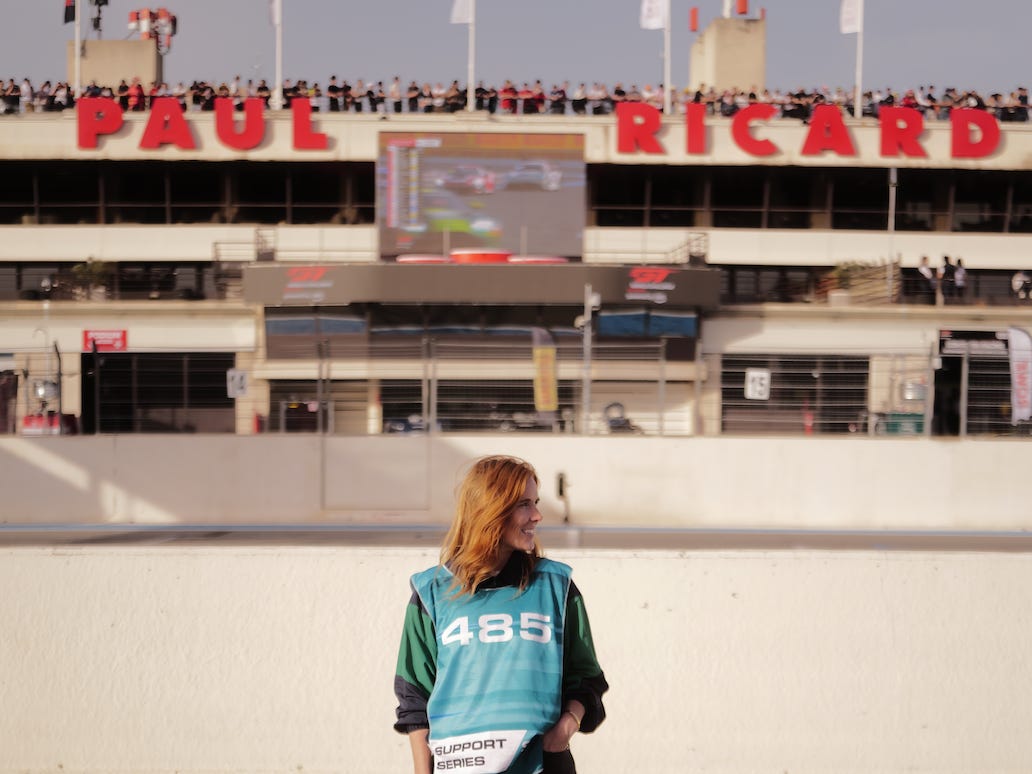
Paul Ricard was where it ended for me this week, after a short drive from Monte Carlo (where I attended the Masters), and the timing felt pointed. The GT3 Revival Series is a championship launched by SRO Motorsports Group and Peter Auto to mark the 20th anniversary of the GT3 category, and it debuted here, at the circuit where, in a way, all of this began. It’s a series I know very little about, but one Max Verstappen absolutely loves and the grid is stacked with top-tier drivers, so my interest was piqued.
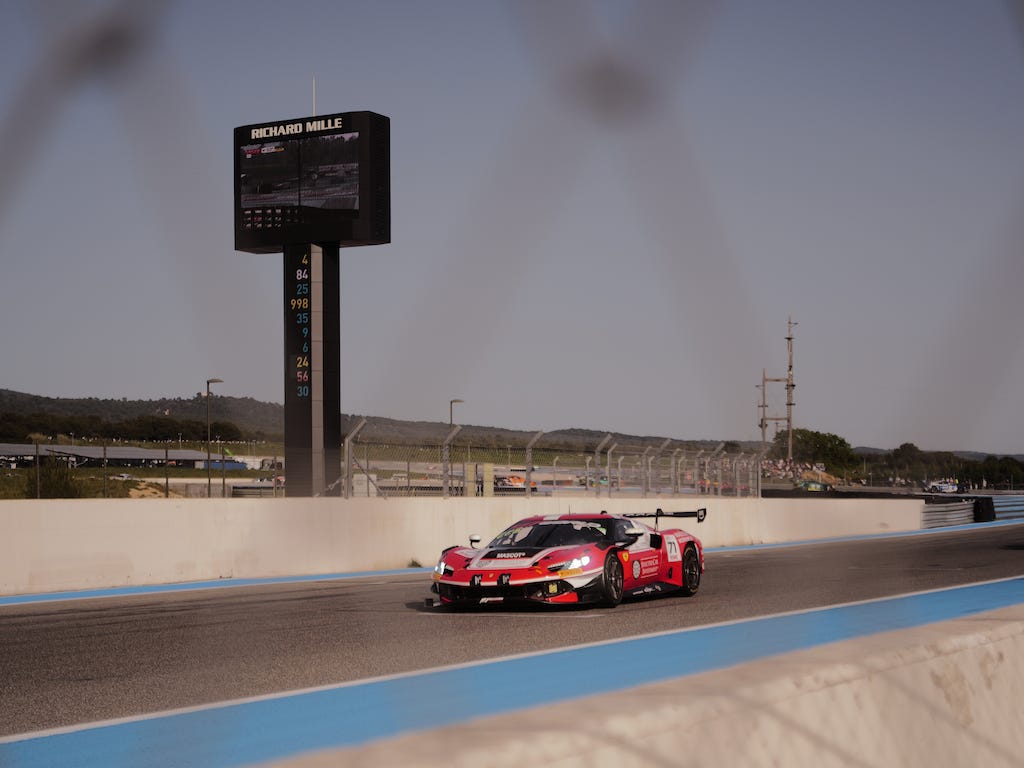
Two decades after its launch, the inaugural FIA GT3 European Championship arrived at Silverstone with a 44-car entry and a simple proposition: shared performance, multiple manufacturers, racing that made sense from the outside. That proposition has since underpinned every major GT and endurance championship in the world. This series is the anniversary edition, but it doesn’t feel like a museum - actually, quite the opposite.
The architecture is deliberate. Eligible cars span the first eight years of GT3 competition, separated into two categories: those homologated between 2006 and 2009 represent Gen I, while cars from 2010 to 2013 make up Gen II. SRO applies its Balance of Performance using era-specific archives, Pirelli provides a spec tyre for all, and the grid features a Pro-Am and Am class structure - so the same philosophy that made modern GT3 work is being applied here. The cars on track at Paul Ricard include the Ford GT run by Debard Automobiles by Racetivity - the car with which Matech GT clinched the FIA GT3 European Championship in 2008 - alongside a Mercedes-Benz SLS AMG GT3 driven in period by Heinz-Harald Frentzen, and a generation of machinery that most current fans have never seen race competitively.
The focus of the series isn’t what it’s celebrating - it’s what it’s demonstrating. GT3 was built to offer something for everyone, from the best driver on the planet to those who race as a hobby. The Revival Series inherits exactly that. Stéphane Ratel and Patrick Peter aren’t packaging sentiment - they’ve been building this together since 1993. These are two people who understand what made GT racing matter in the first place, and choosing to return to it with full seriousness. No manufactured spectacle in sight.
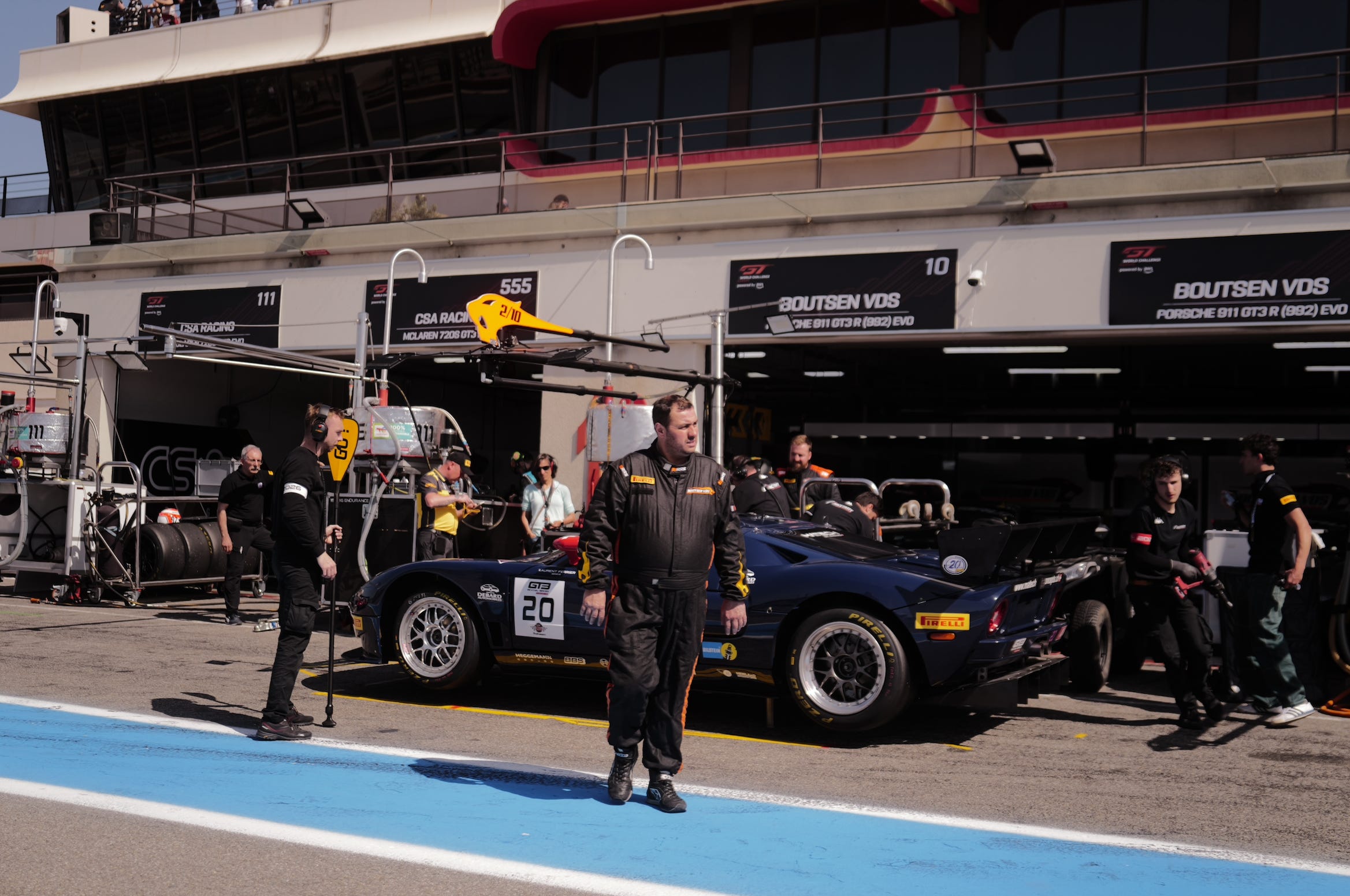
The nostalgia economy is real, but the smartest version of it isn’t looking backwards out of desperation. This is looking backwards with intention. Because sometimes what everyone’s craving isn’t something new - but something that feels true.
[Bon goût] - for those with an acquired taste.
There are bigger tournaments and louder ones. But the Monte Carlo Masters is the formal opening of the high-end clay-court swing - the moment the ATP Tour leaves the hard courts of North America and the Middle East and arrives at the Mediterranean coast. And although I don’t fully understand the details that this entails, I can appreciate the specialness of this tournament. The setting does most of the talking. The Monte-Carlo Country Club has been the tournament’s home since 1928, with 21 courts arranged across descending Art Déco terraces facing the sea, the main court positioned so that players compete with the Mediterranean directly behind them. It is compact compared to larger ATP venues, which gives it an atmosphere that feels closer to the action and harder to replicate elsewhere. Players who could skip it often don’t. That tells you something.

The Monte Carlo Masters is one of the only Masters 1000 events that is non-mandatory, meaning players choose to be there. There are no stadium expansions eating into the terraces, no sponsor banners overwhelming the sightlines. The crowd arrives dressed in Riviera elegance, the deep orange-coloured clay glows against the green and blue surroundings, and the ceremony still involves a royal presentation. In a sport that has spent the last decade chasing scale and broadcast packages, Monte Carlo remains stubbornly, beautifully itself - a tournament that understands the difference between prestige and noise. A little like the Monaco F1 Grand Prix - a race I swore I would never enjoy, and yet here I am again gearing up to attend it again this year.