


Thank you for being here. You are receiving this email because you subscribed to Idée Fixe, the newsletter for curious minds. I’m Toni Cowan-Brown, a tech and F1 commentator. I’m a former tech executive who has spent the past five years on the floor of way too many F1, FE, and WEC team garages, learning about the business, politics, and technology of motorsports.

⏳ Reading time: 5 minutes
Shift Happens, weekly pivots where motorsport collides with tech and culture. A quick roundup of the headlines in and around motorsport you should be aware of. I hope you enjoy this new curated format.
Both newsletters this week will land in your inboxes a day later than usual as I’m on-site all week in Detroit, Michigan, for the Detroit Auto Show, a full Ford immersion and press trip and the launch of both the Red Bull and the VCARB F1 teams. It’s a packed agenda for the week ahead, and there is a lot to share - but that’s all for Friday’s newsletter.
The lead lap
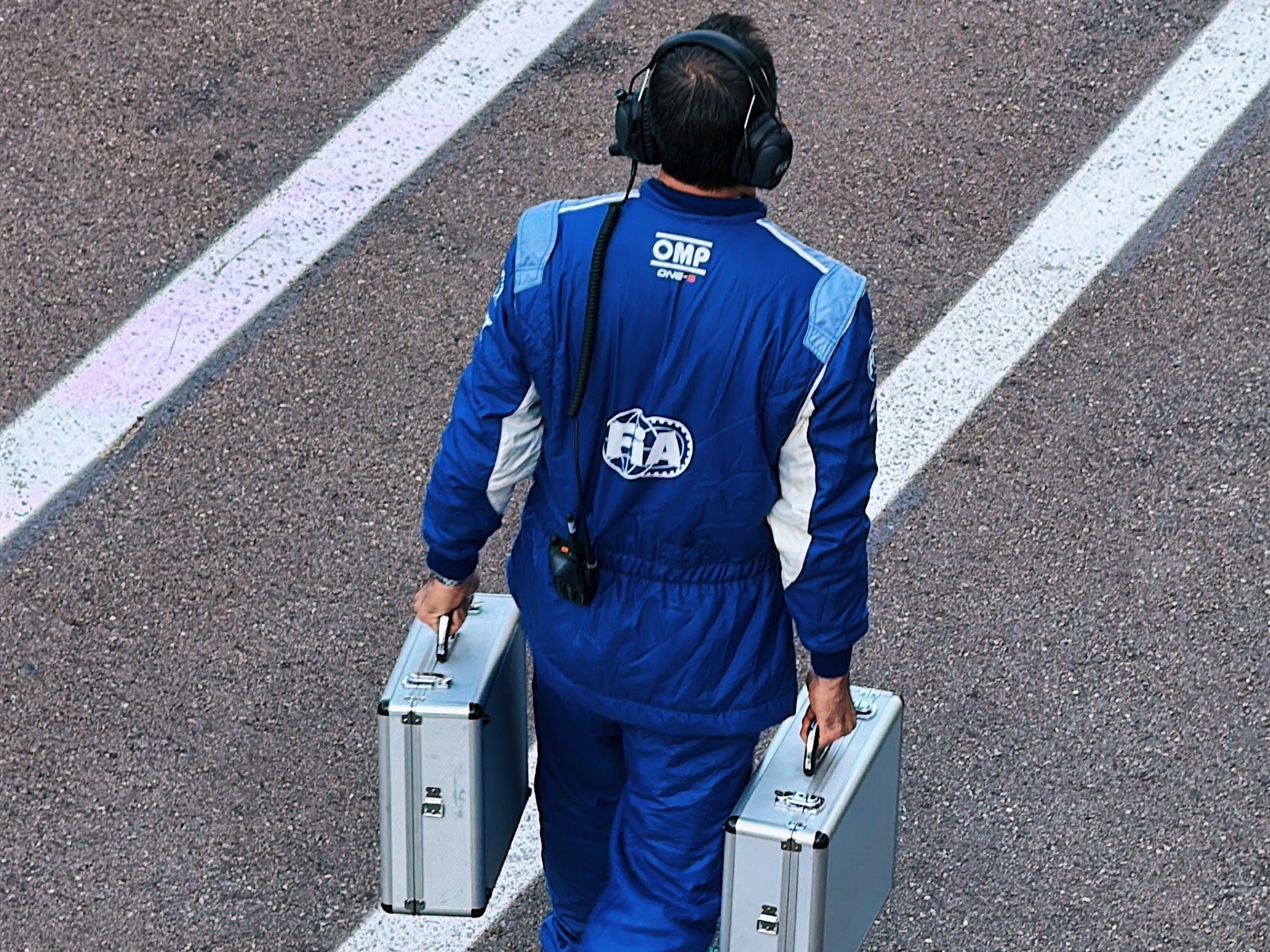
Let’s talk about fuel, as I have realised that just like Daniel Ricciardo circa 2020, most of us are confused by the fuel used in Formula One. The 2026 season promises a power unit revolution that goes far beyond the headline numbers. Yes, the electric component will triple from 160 to 470 horsepower, creating an almost 50-50 split with the combustion engine. And every car will run on 100% sustainable fuel. But the most fascinating competitive dynamic might be the one happening in chemistry labs (remember this video about the FIA’s mobile fuel lab) rather than wind tunnels.
While all teams must use FIA-mandated sustainable fuel derived from “atmospheric carbon capture, non-food biomass, and municipal waste”, six different fuel suppliers will be competing for performance advantages. Shell supplies Ferrari power units (used by Ferrari, Haas and Cadillac), Petronas powers Mercedes power units (used by Mercedes, McLaren, Williams and Alpine), ExxonMobil fuels Red Bull Ford power units (Red Bull and Racing Bulls), BP Castrol serves Audi, and Aramco backs the Aston Martin team (A Honda power unit).
The FIA sets strict sustainability criteria and performance boundaries, but within those constraints, different fuel chemistries can create up to 20% difference in energy flow. When you’re limited to just 70kg of fuel per race - down from 100kg today and 160kg in 2013 - every molecule matters. Different sustainable fuels have fundamentally different energy densities, combustion speeds, knock resistance, and thermal efficiency characteristics.
Teams can’t simply switch suppliers; engines are optimised for specific fuel chemistry, often developed through partnerships spanning decades. Ferrari and Shell have worked together since the 1930s. These relationships now take on new significance as manufacturers navigate a completely reimagined fuel-engine relationship, and the challenge is to extract maximum performance from a fuel formula that didn’t exist three years ago.
The irony? Aramco worked with F1 to develop the sustainable fuel standards and prove their viability already in Formula 2 and 3, yet they’re just one competitor in 2026. There’s already speculation that their fuel chemistry is the most developed, potentially giving Aston Martin’s Honda power unit an unexpected advantage.
The number of the week
~8,000km is the total distance of the Dakar - the extreme off-road endurance race held in Saudi Arabia, currently happening right now (a 14-day format), and we still have three full days of racing. It’s got about ~5,000km of competitive stages (13 stages), and there are over 800 competitors across the various categories and vehicle classes.
Three stories that need to be on your radar
The trick up Mercedes and Red Bull’s sleeve - or engine - explained. There has been a little controversy surrounding Mercedes and Red Bull's 2026 F1 engines and their compression ratio. As succinctly as possible, the FIA regulations stipulate a maximum compression ratio of 16:1, measured at ambient temperature, but there are suggestions that Mercedes and Red Bull have found a way (loophole) to achieve higher compression ratios at operating temperatures while still complying with the static tests. A higher compression ratio could provide better fuel efficiency. The controversy centres on how the regulations should be interpreted: whether engines must comply with the 16:1 limit at all times during competition, or only during static testing at ambient temperature. The FIA has stated it has no immediate plans to change testing procedures, but may consider adjustments in the future. Link
Why Every Sports Organization Needs Its Own Definition of F.A.N.S? A good deep-dive into the history and meaning of the word ‘fan’. Link
Why Sport Has Become Luxury’s Biggest Stage. If you are covering sports, you’ve probably noticed just how much luxury brands have shifted from traditional elite sports like polo and sailing to mainstream sports such as football, basketball, and Formula 1. As David Skilling points out, this change reflects economic necessity rather than a shift in taste - the modern luxury industry has grown too large to rely on quiet prestige alone. The strategy is paradoxical: brands use sport's mass visibility to defend their positioning and relevance while simultaneously narrowing their actual customer base through pricing and distribution. Formula 1 has become particularly attractive because it combines global reach with a premium visual language and narratives around performance and precision. Link
One video worth your time
Give these women their own show, now. Meet the first British Women’s team - aptly named, Gazelles Off Road - who prepared and entered the Dakar Classic in 2026 in their Land Rover 110 Td5 rally car. They had never built a car before this, and in their own words, “how difficult can it be?”
One [event] that caught my eye
Not one event per se that caught my eye this week, but rather the profoundly disorienting feeling of going through the motions - answering emails, attending meetings, hitting deadlines and in my case this week, joining a press trip, attending an auto show and F1 team launches - while the world outside feels like it’s careening off a cliff. You can’t just stop everything. Bills don’t pause, responsibilities don’t evaporate. But you also can’t pretend it’s all normal, that the weight of what’s happening doesn’t seep into every mundane task.
I have no answers and absolutely no moral high ground to stand on, but I did want to share this constant tension I’m feeling - and honestly, one I have been feeling for, gosh, probably six years now. It’s the tension between necessity and awareness, between functioning and feeling. You show up because you have to, because others depend on you, because life stubbornly continues. But there’s a part of you that wants to scream: How are we all just doing this? The world asks us to be productive while also being human, to keep our heads down while keeping our hearts open, to move forward without moving past what matters.
During the Golden Globes, Mark Ruffalo spoke about empathy, and it struck a chord with me. Empathy isn’t a luxury we indulge when things are calm - it’s the fragile thread that keeps us tethered to each other when everything else feels untethered. It’s what allows us to do our jobs and hold space for what’s breaking. Not switching off, not burning out, but somehow doing both: carrying on and caring deeply, even when -especially when - it feels impossible.